
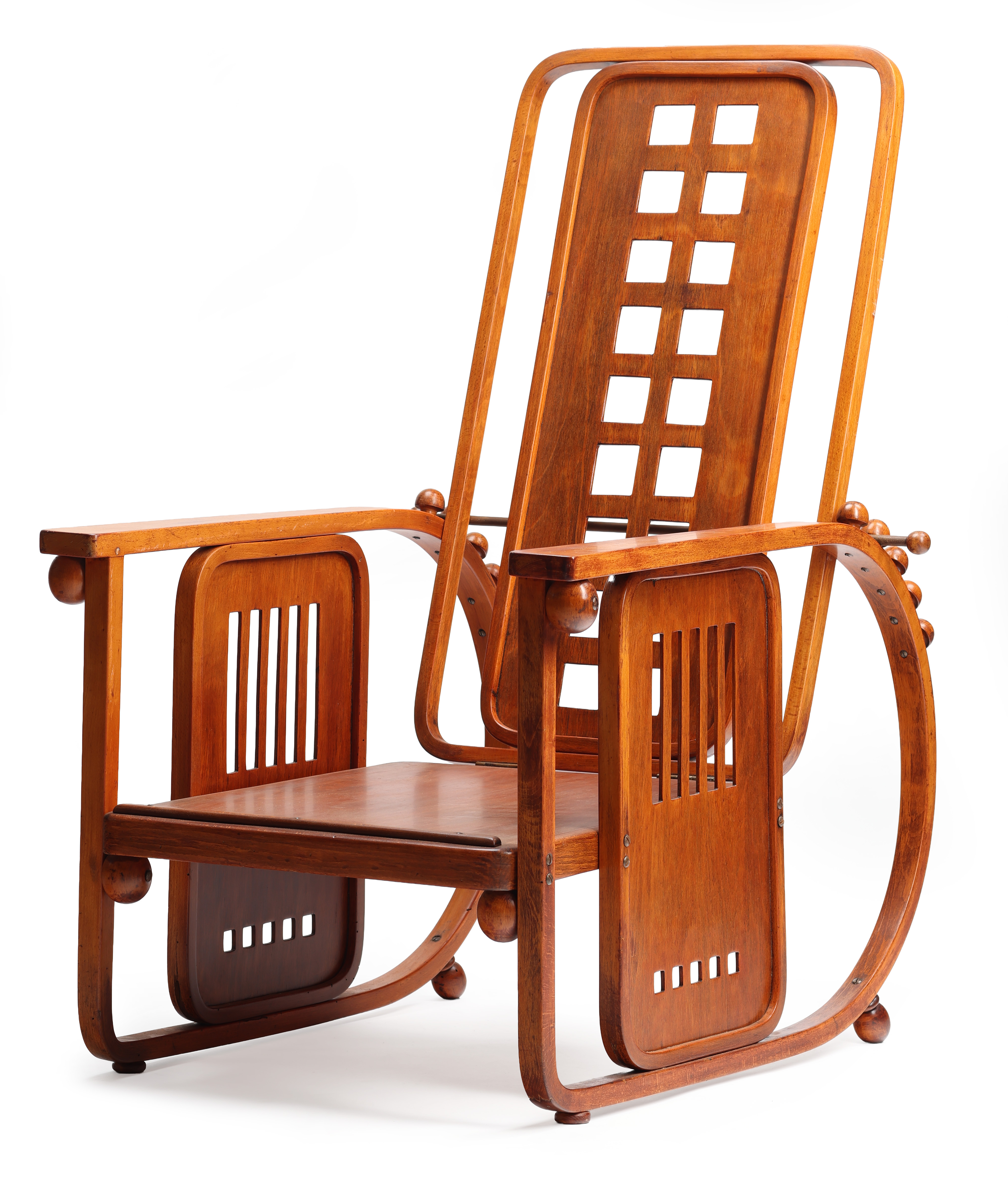
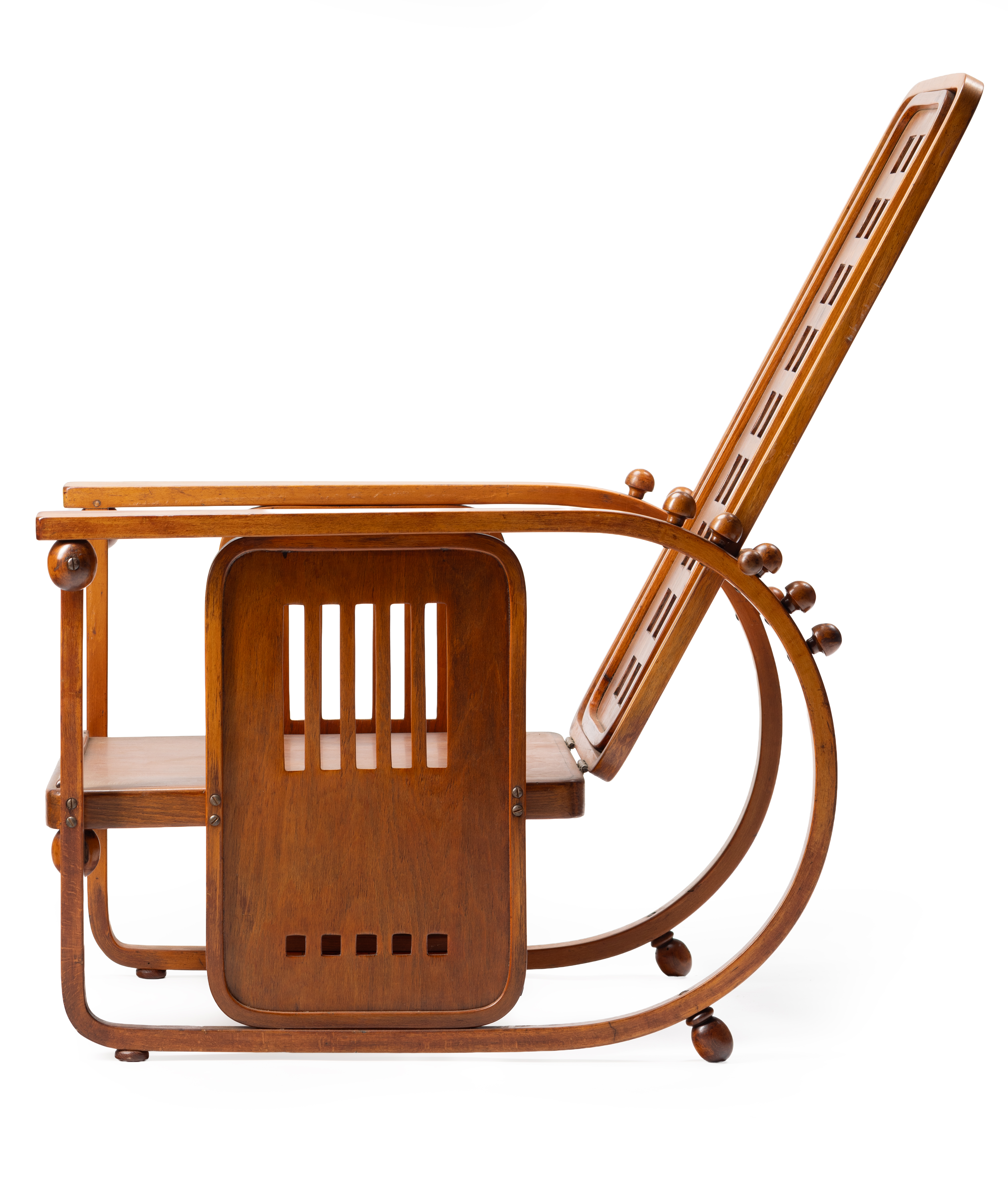
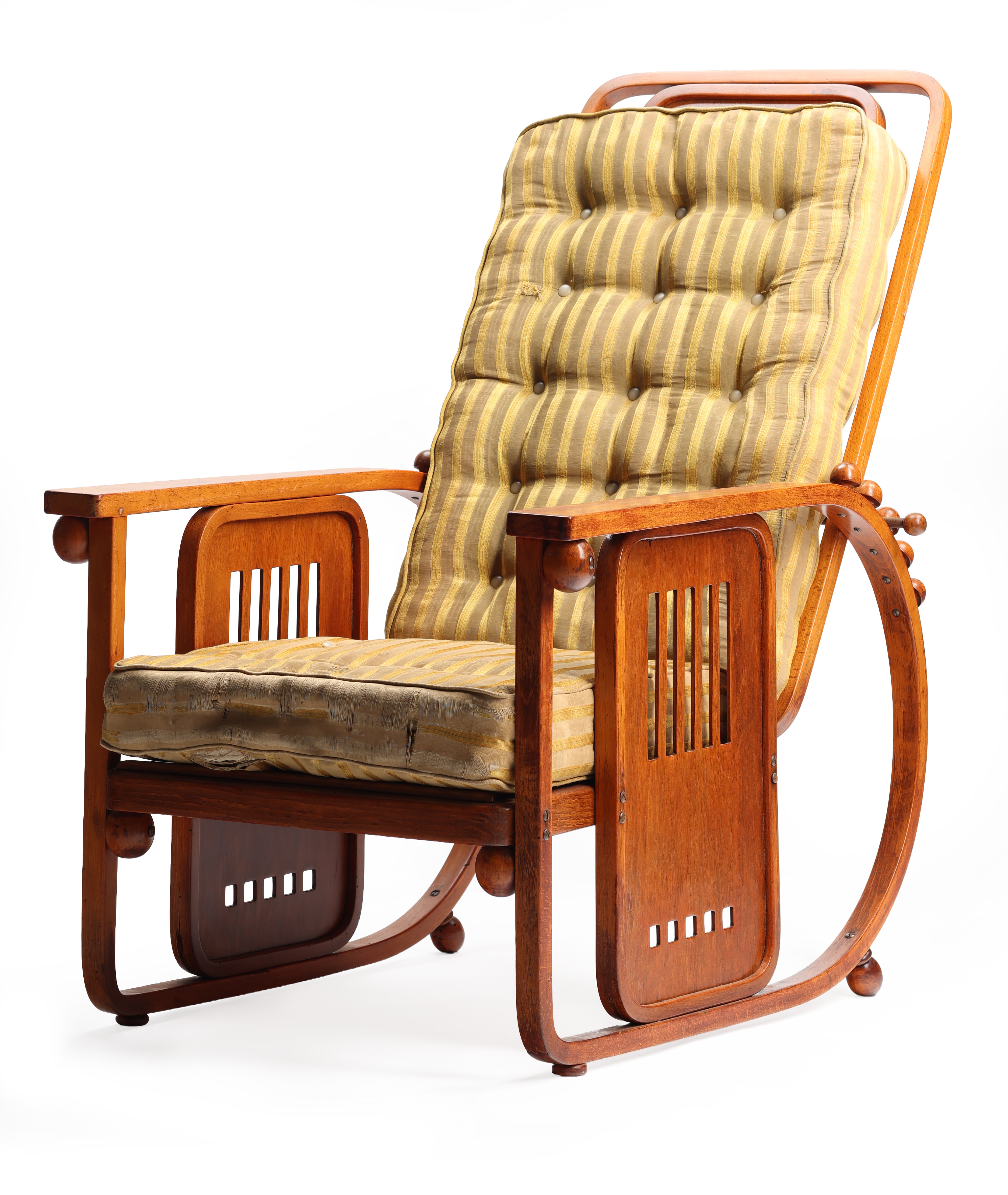
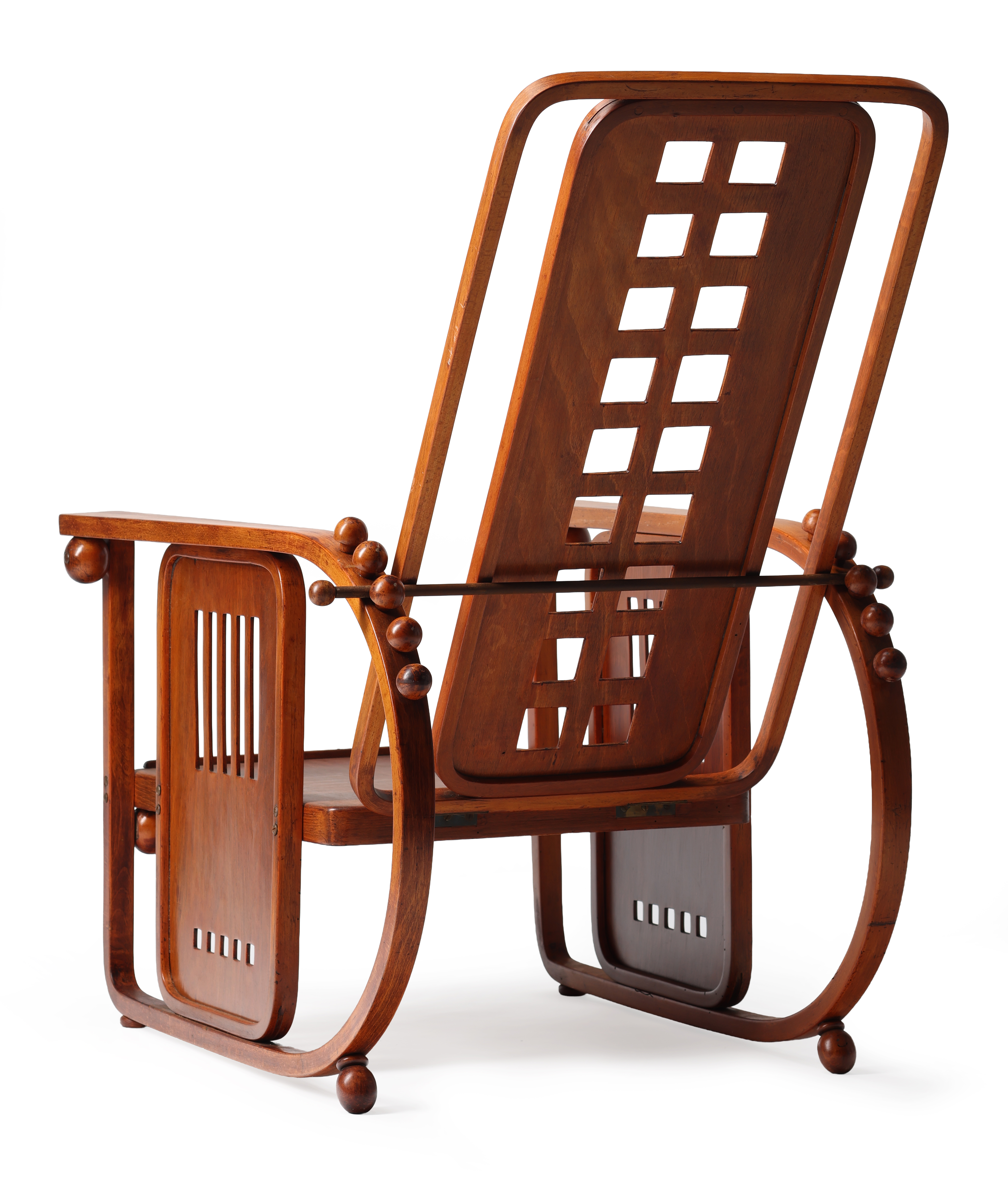
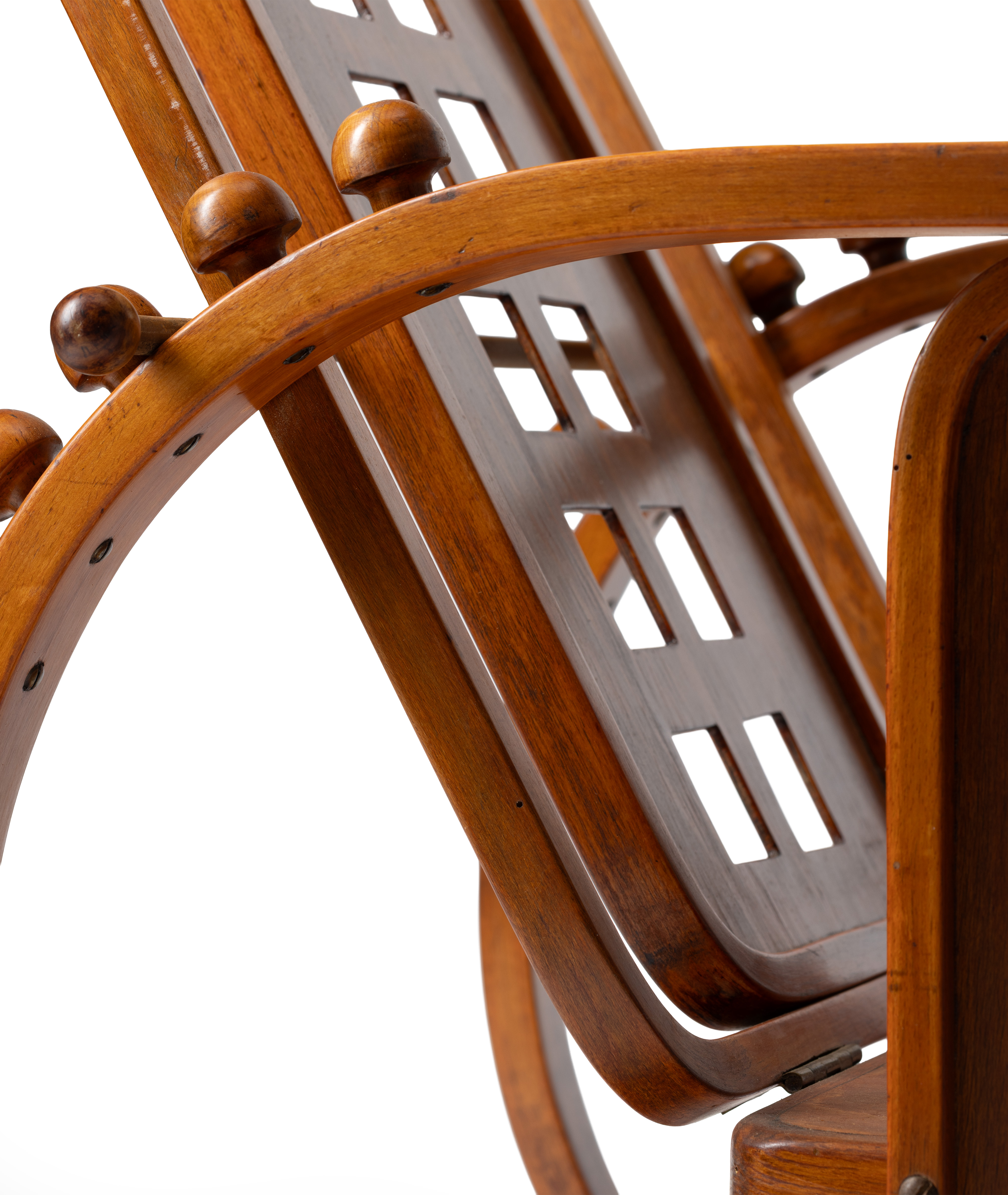
The SITZMASCHINE, or "machine for sitting", was designed by Josef Hoffmann in 1905 for Purkersdorf Sanatorium. It represents one of Hoffmann's earliest experiments in unifying a building and its furnishing as a total work of art.
• Dimensions: height - 110cm, width - 72cm, depth - 81cm
• Designer: Josef Hoffmann
• Model: -
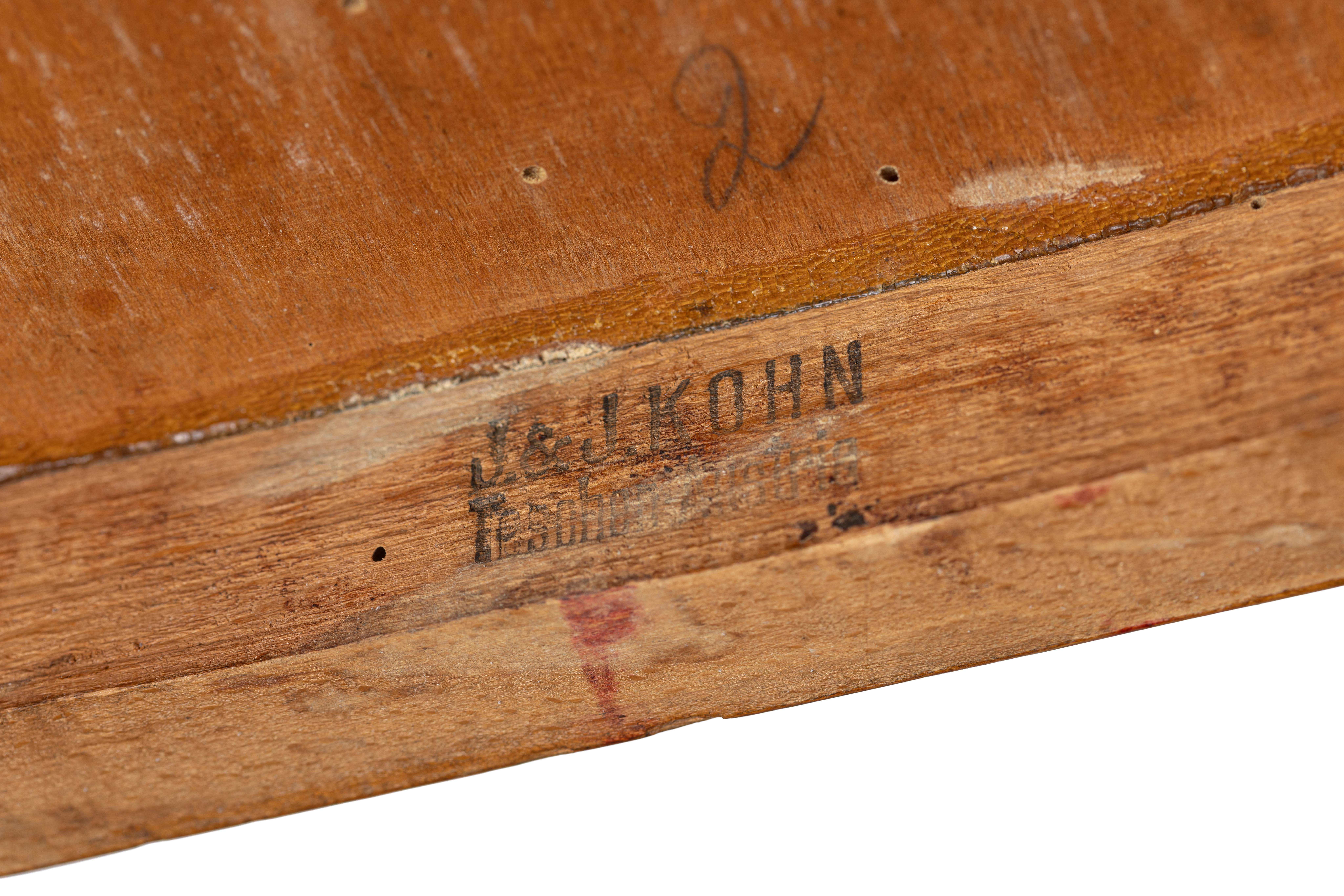
• Manufacturer: J&J Kohn
• Style: Art Nouveau
• Material and Techniques: Bent beechwood, fabric upholstery, metal bolts
• Place of origin: Austria
• Production period: 1905-1916
• Condition: Good. Age-related patina

Reach out to us to inquire about or request a quote for the items you've selected, including your preferred quantities and we’ll get back to you as soon as possible.
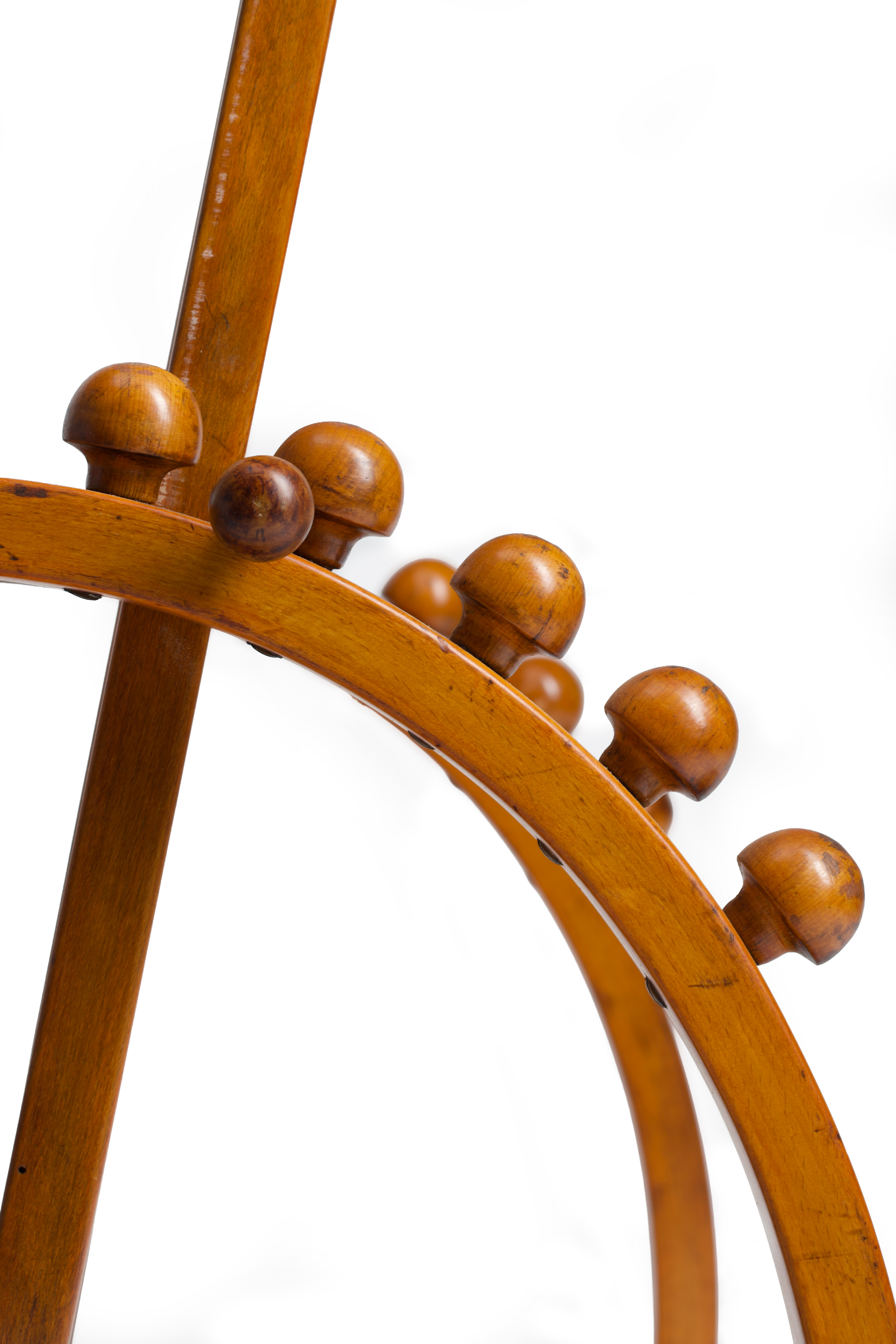
Hoffmann’s variant incorporates a fusion of decorative and structural elements typical of the Wiener Werkstätte style: the grid of squares piercing the rectangular back splat, the bentwood loops that form the armrests and legs, and the rows of knobs for adjusting the back.
J. & J. Kohn manufactured and sold this chair in a number of versions, most of which had cushions on the seat and back, until at least 1916. The Kohn firm produced many designs by Hoffmann, forming one of the first successful alliances between a designer and industry in Vienna.
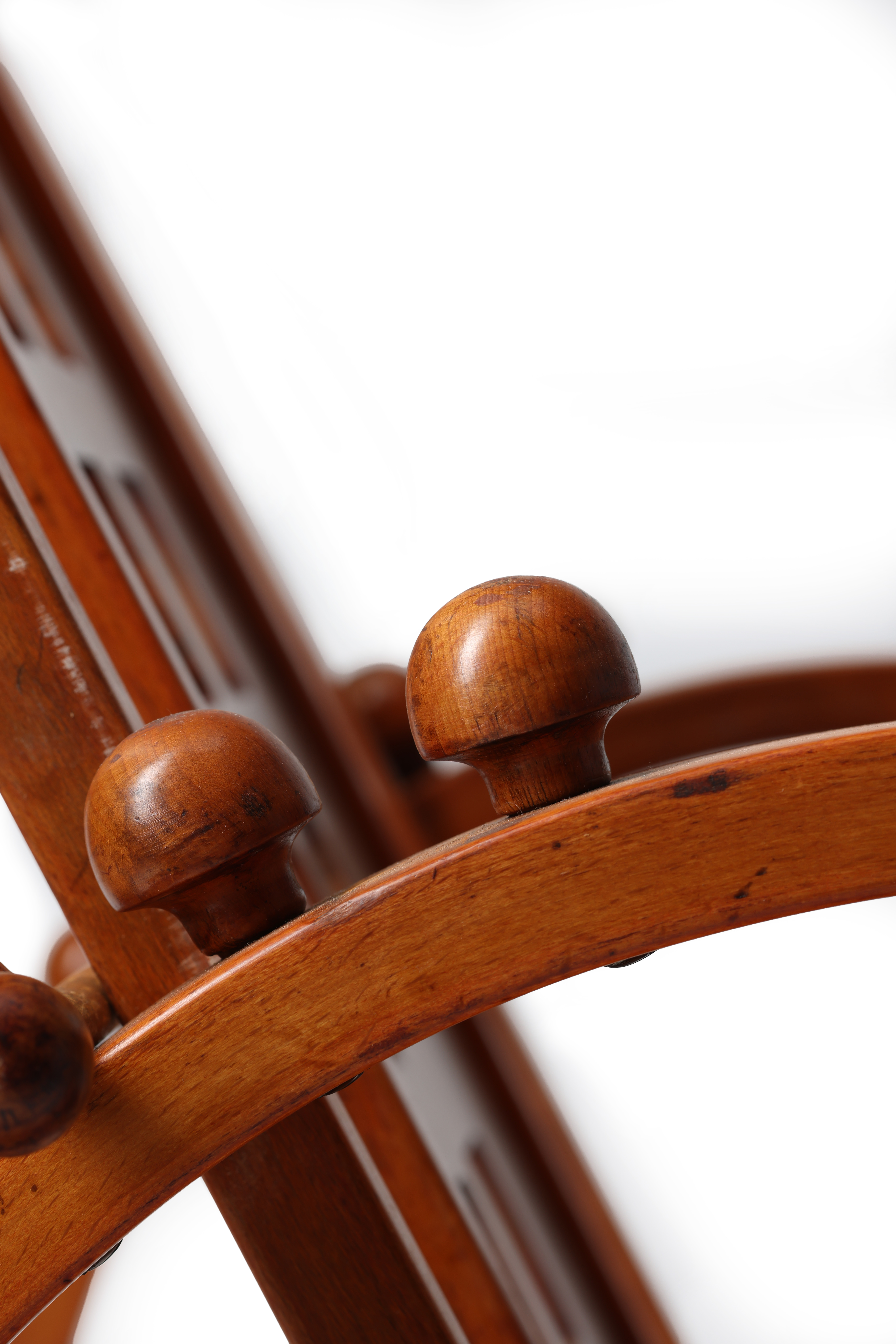
The reclining mechanism (usually 3–5 positions depending on version) was highly unusual in avant-garde furniture of that time. This was comfort engineered into a modernist object. The chair is an early example of ergonomic thinking: adjustable reclining positions, support for different sitting angles, adaptation of furniture to the human body. In concept it relates to the English Morris chair, but with a far more rational and modern form.
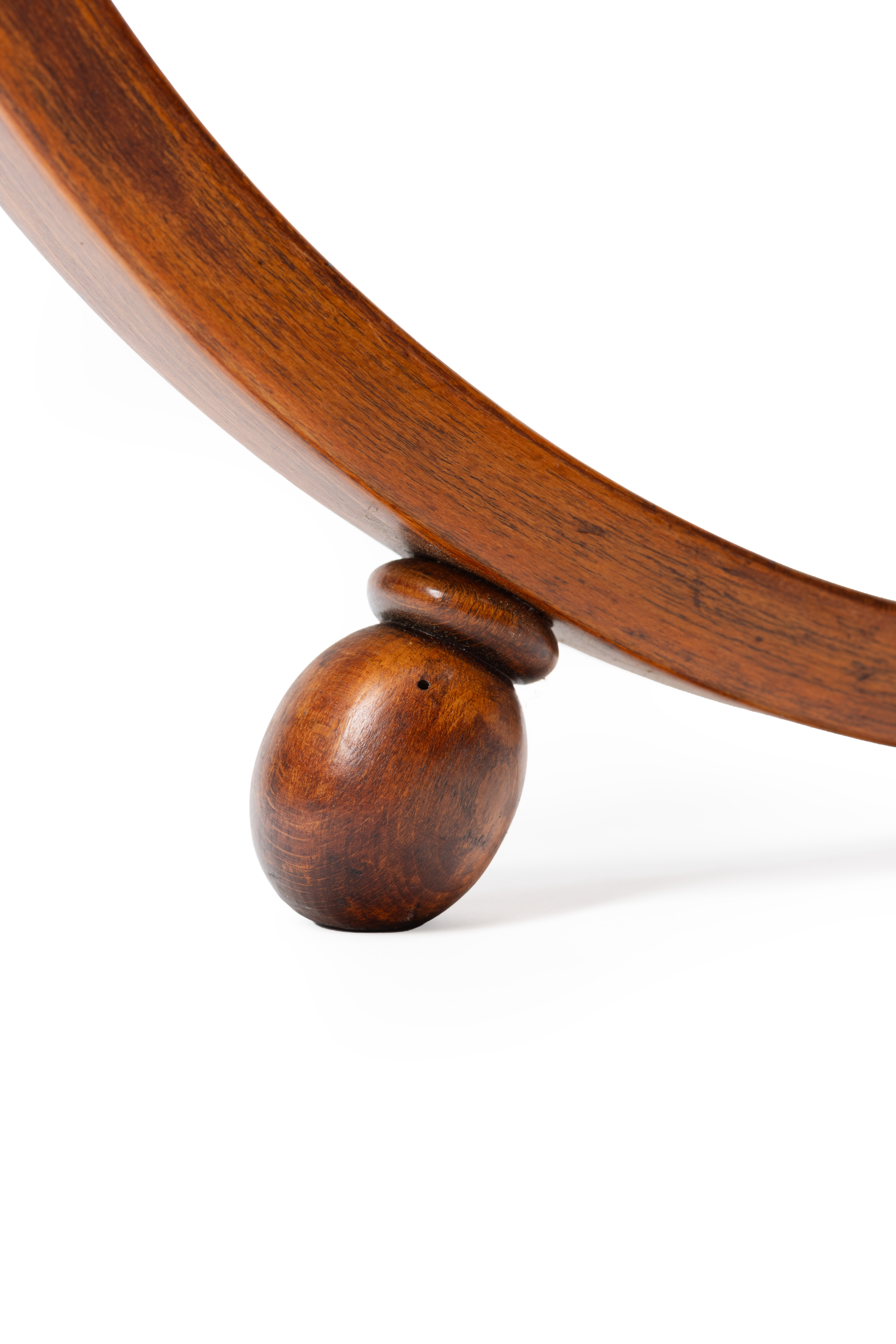
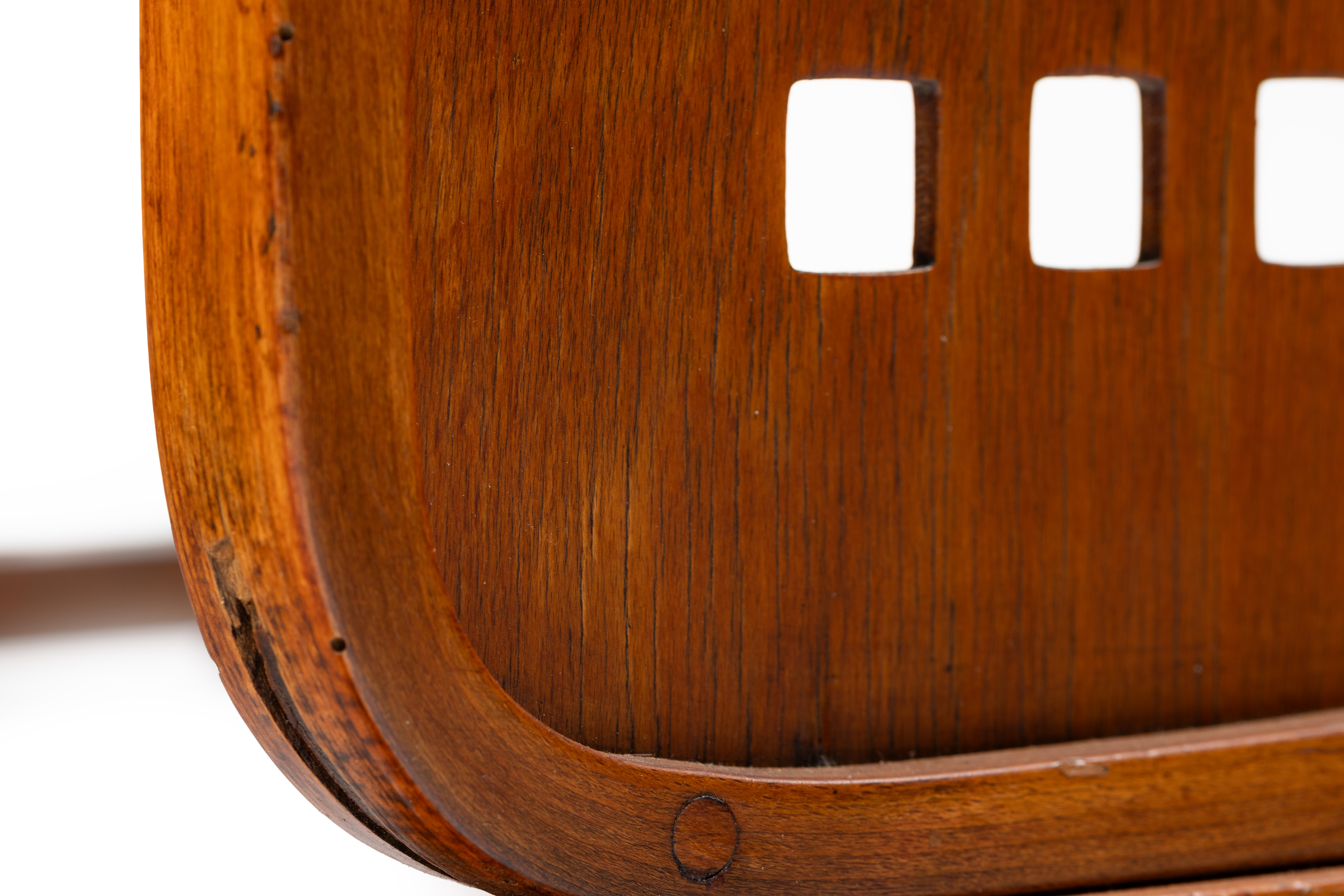
The chair is essentially built from squares, circles (notably the large rear wheels/discs) and straight linear members.
Hoffmann was obsessed with the square as a design principle — so much that he was nicknamed “Quadratl-Hoffmann”.
The oversized rear wheels aren’t decorative only — they hold the adjustable back mechanism. But visually, they give the chair a graphic, almost logo-like presence.

