
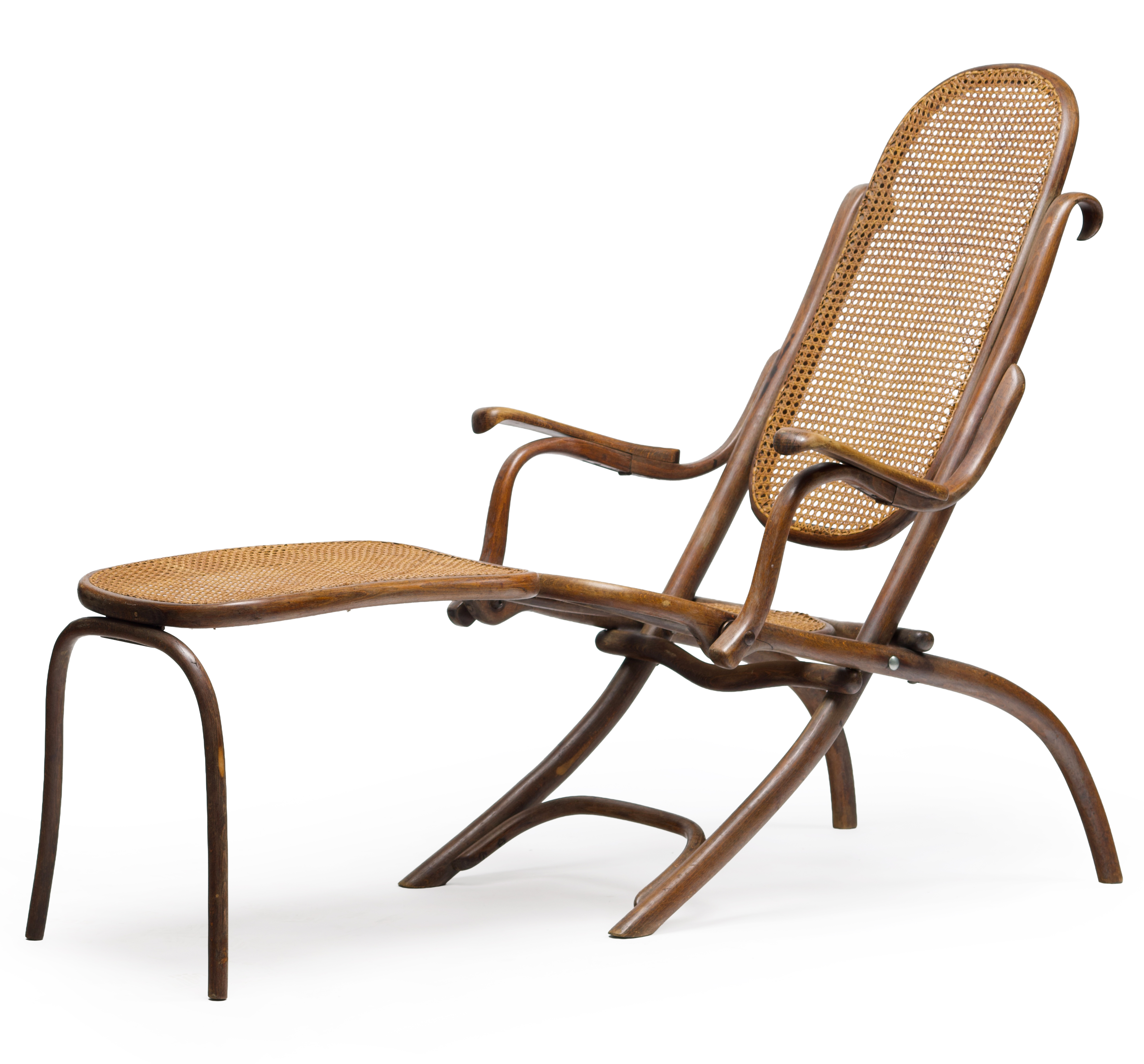
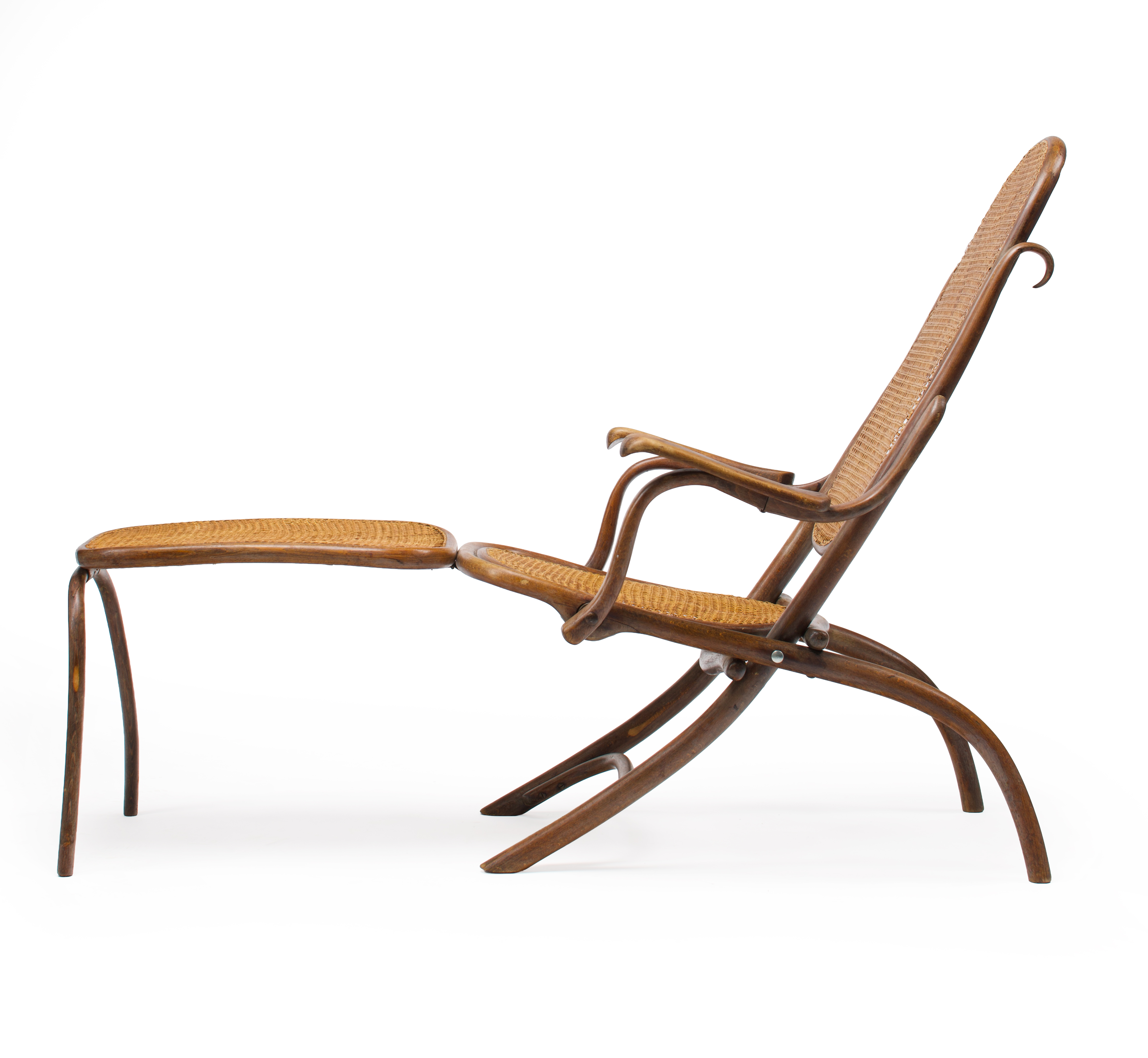
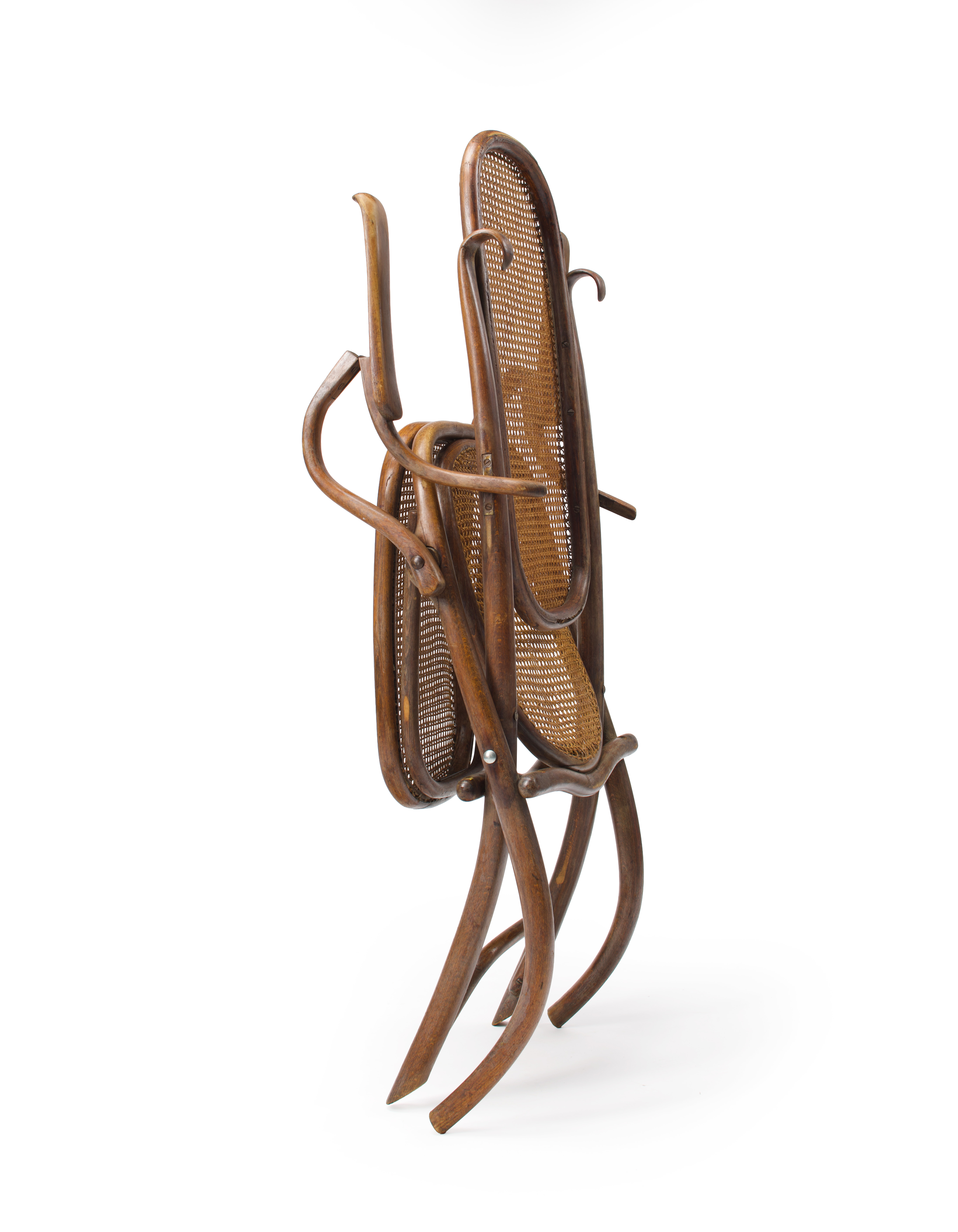


This particular design was introduced around 1866-1867 and was exhibited at the 1867 World Exhibition in Paris, where Thonet received a gold medal.
• Dimensions: height - 100cm, width - 56cm, length - 155cm
• Designer: Michael Thonet
• Model: n.1
• Manufacturer: Thonet
• Style: Art Nouveau
• Material and Techniques: Bentwood, rattan
• Place of origin: Austria
• Production period: 1866-1890
• Condition: Good. Age-related patina

Reach out to us to inquire about or request a quote for the items you've selected, including your preferred quantities and we’ll get back to you as soon as possible.
A reclining chair that asks nothing of you except to slow down. Bentwood and cane adjustable chaise longue by Thonet, first produced circa 1883. Steam-bent beechwood frame, hand-woven cane seat and back, fixed reclined backrest, separate footrest on curved legs. Original Thonet label intact. This was not a chair for everyone. While Thonet's famous No. 14 - still called the "chair of chairs" with some 50 million produced - was designed for mass consumption, the chaise longue was a different proposition entirely. It required more material, more craft, more space. It was made for those who had all three.
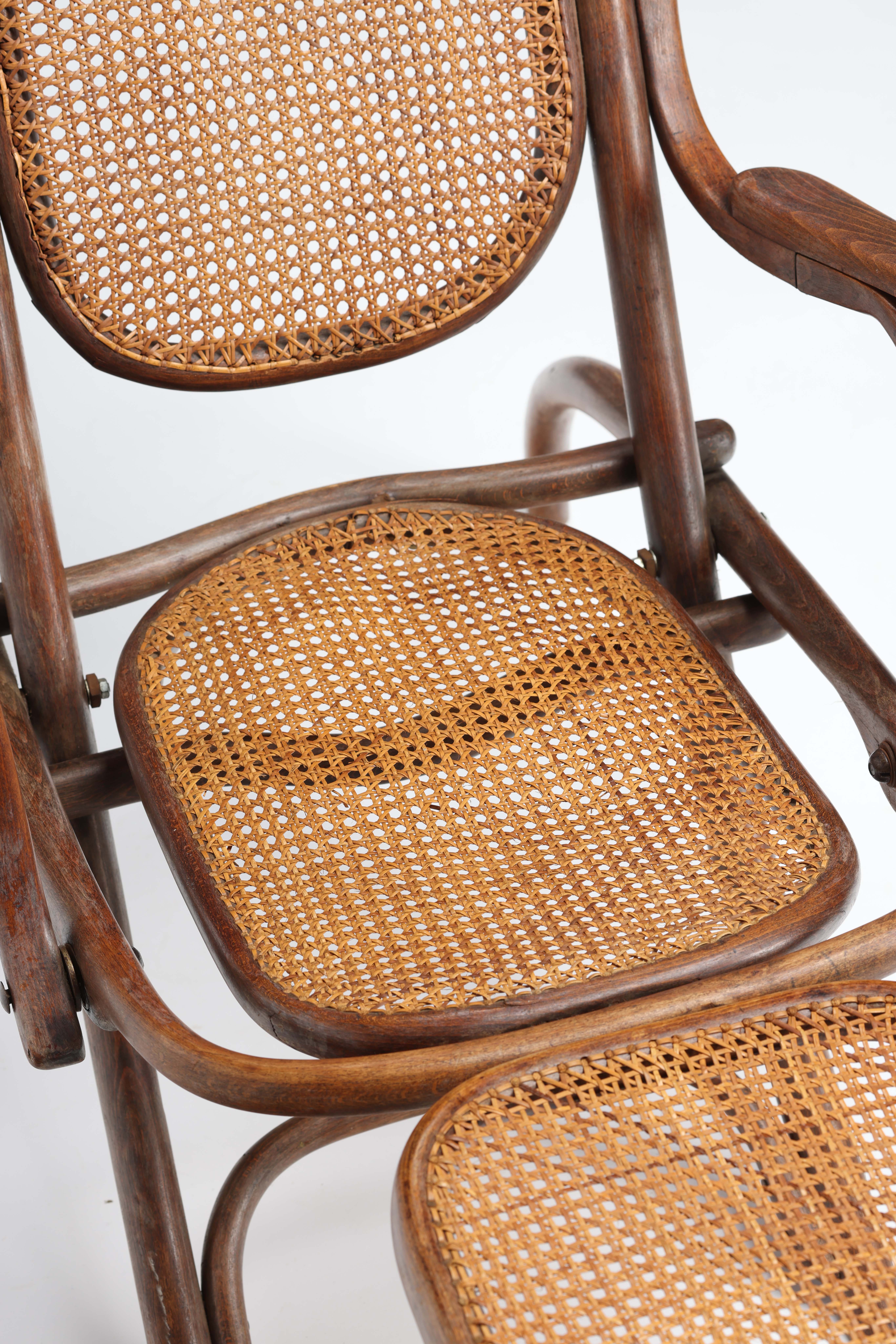
Its clientele: the prosperous bourgeoisie of the Austro-Hungarian Empire and Western Europe. Wealthy industrialists, landowners, professionals. People who furnished country villas and winter gardens, who read in the afternoon and received guests in the evening. The chaise longue appeared where time moved differently.
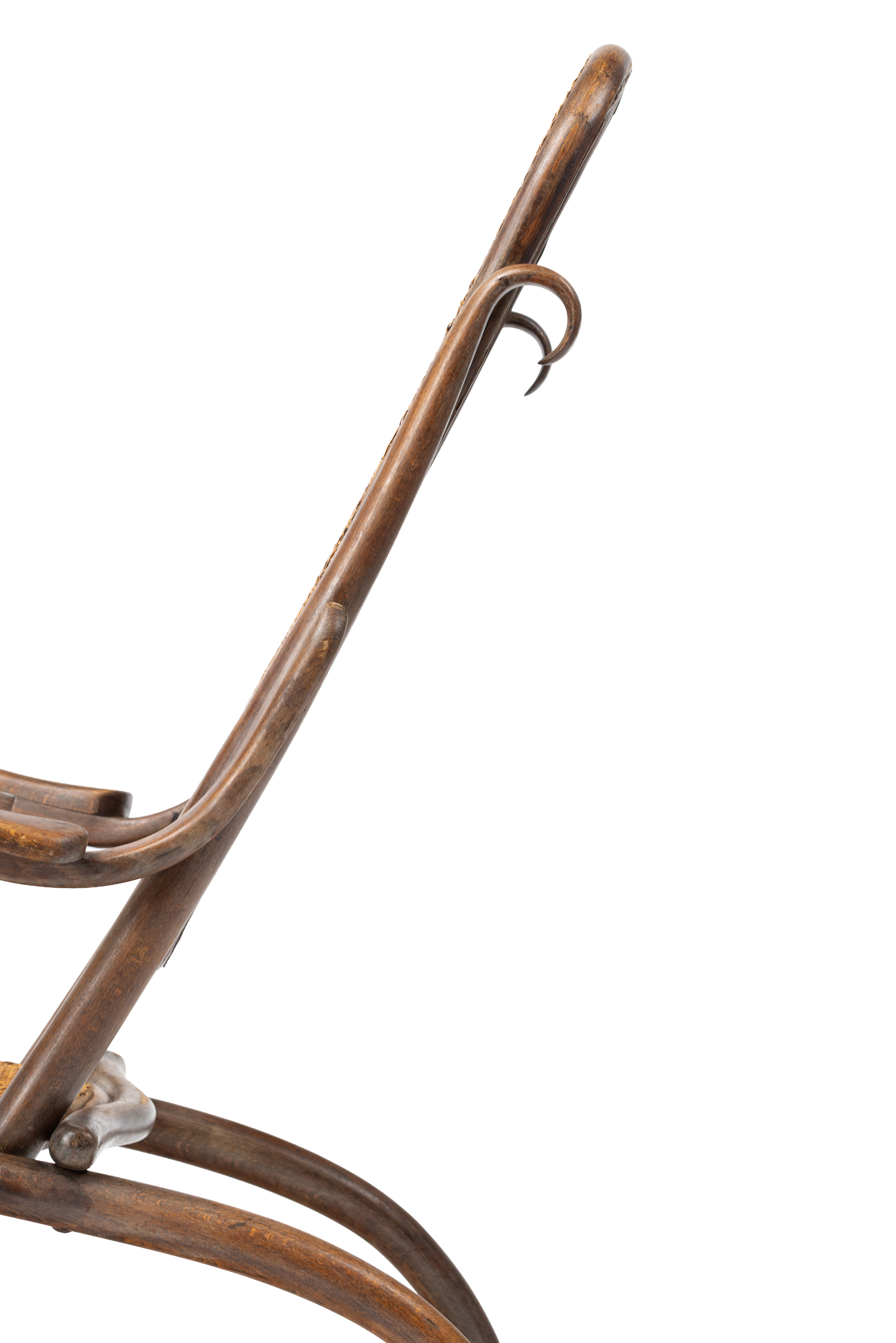
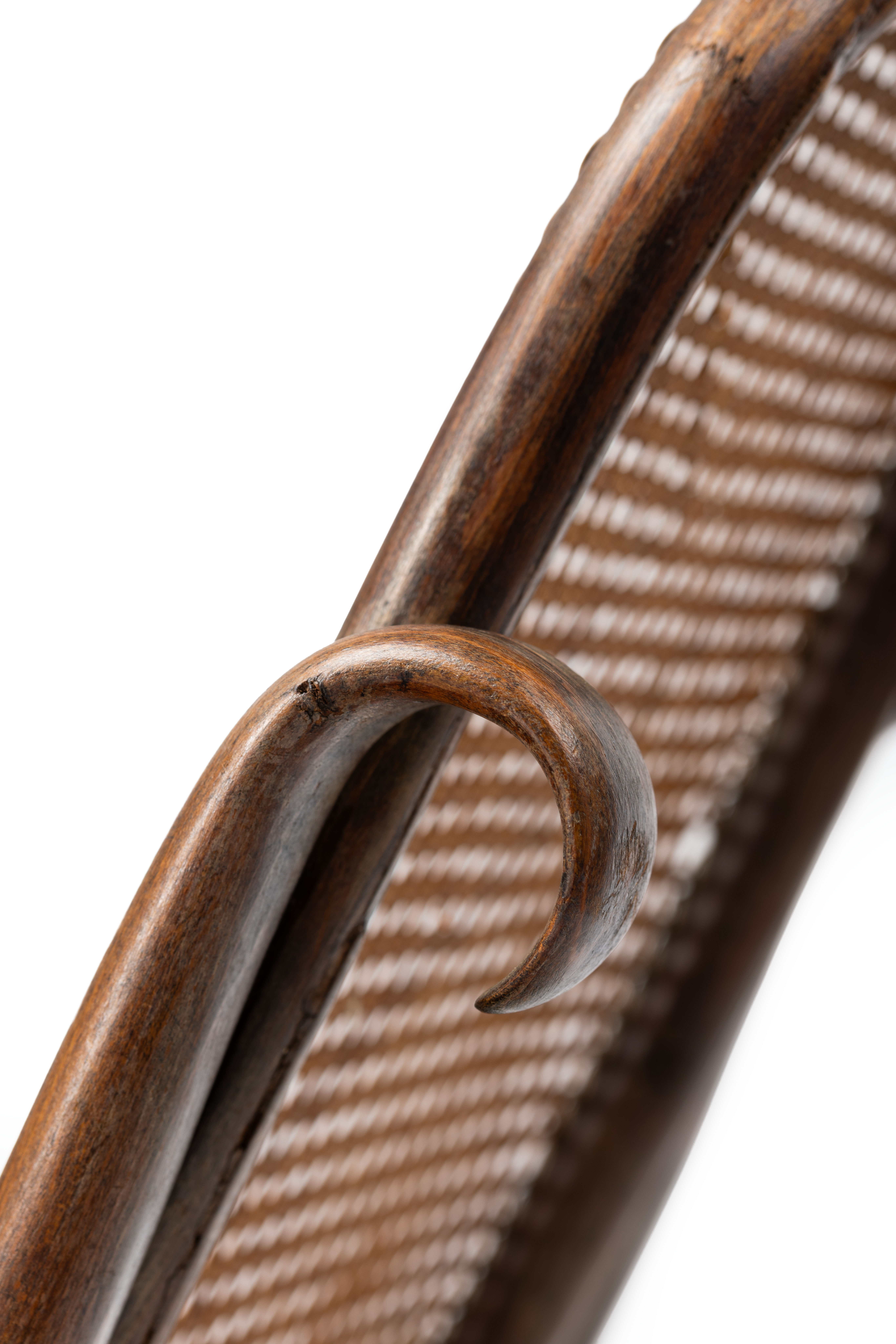
Thonet's essential breakthrough was bending light, strong wood into curved, graceful shapes using hot steam - a complete departure from the heavy, carved designs of the past. The chaise longue is one of the most ambitious expressions of that technique: every curve load-bearing, every joint precise, the entire structure assembled without a single nail. Original finish. Authentic Thonet label. Wear consistent with age and use — the honest patina of an object that has lived.

Today, original examples sell at auction for between $1,800 and $12,500 depending on condition and completeness. In the 1880s, a piece of this complexity would have been priced well beyond the reach of the average household. It was a considered acquisition - a statement of comfort as a value.
