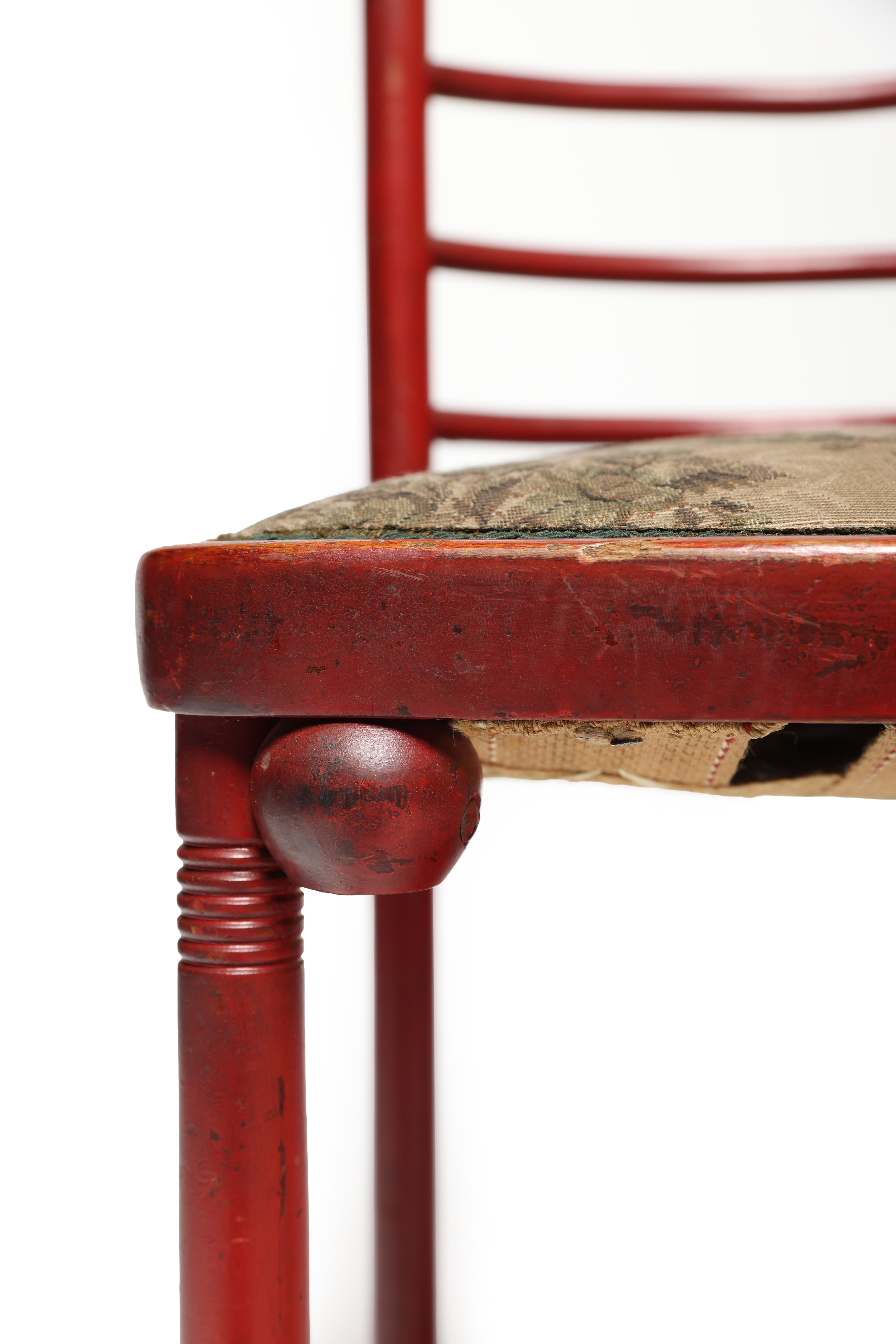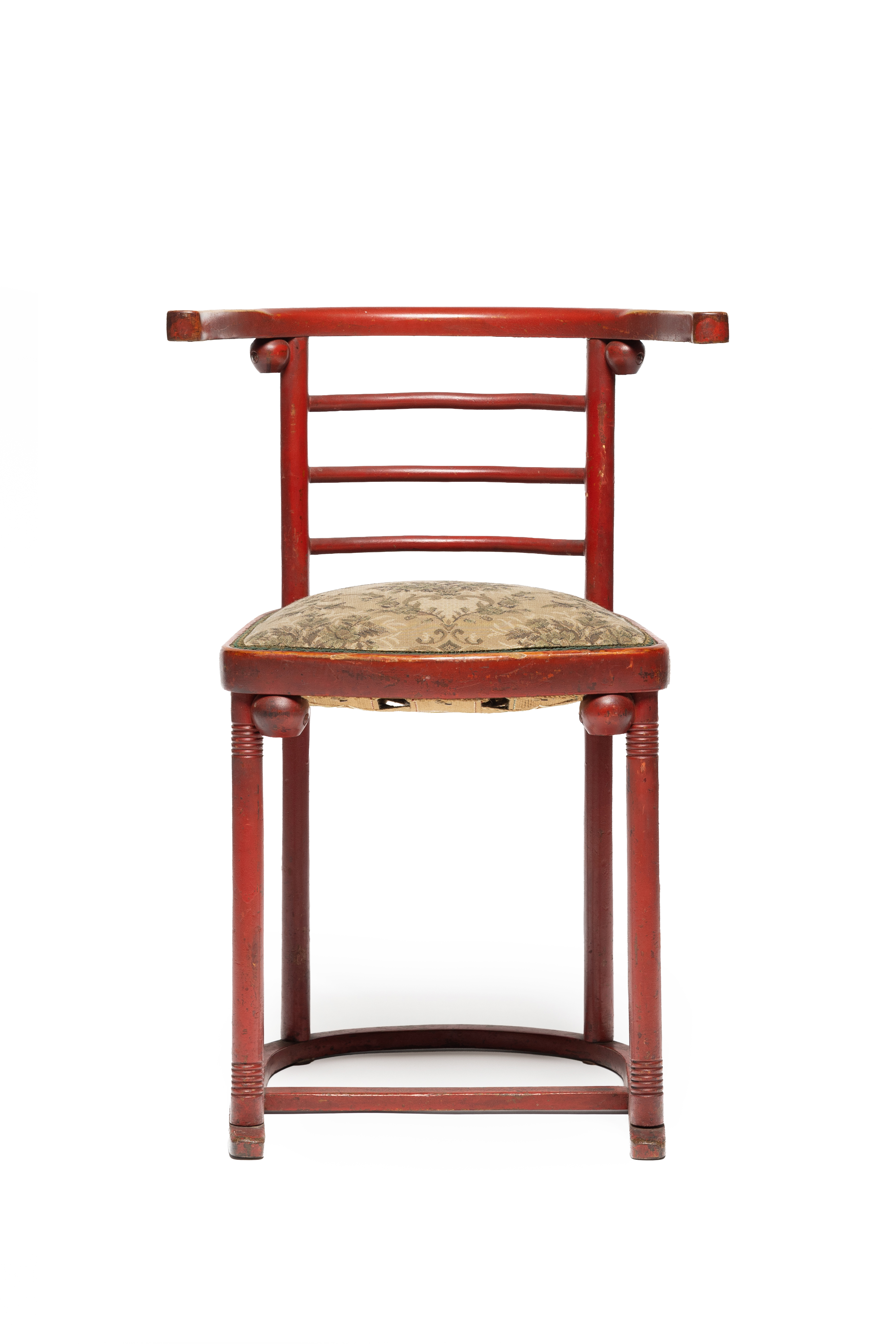
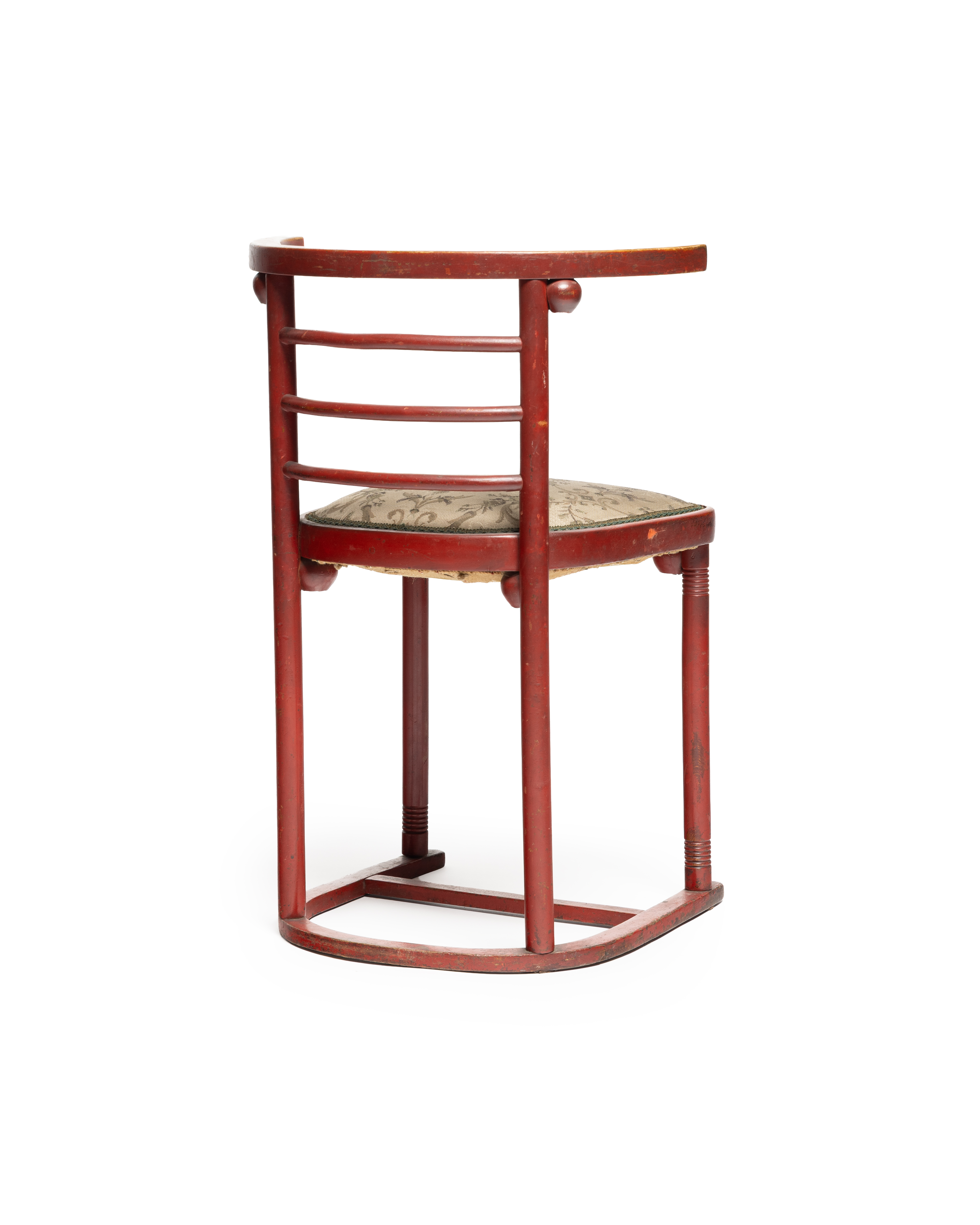
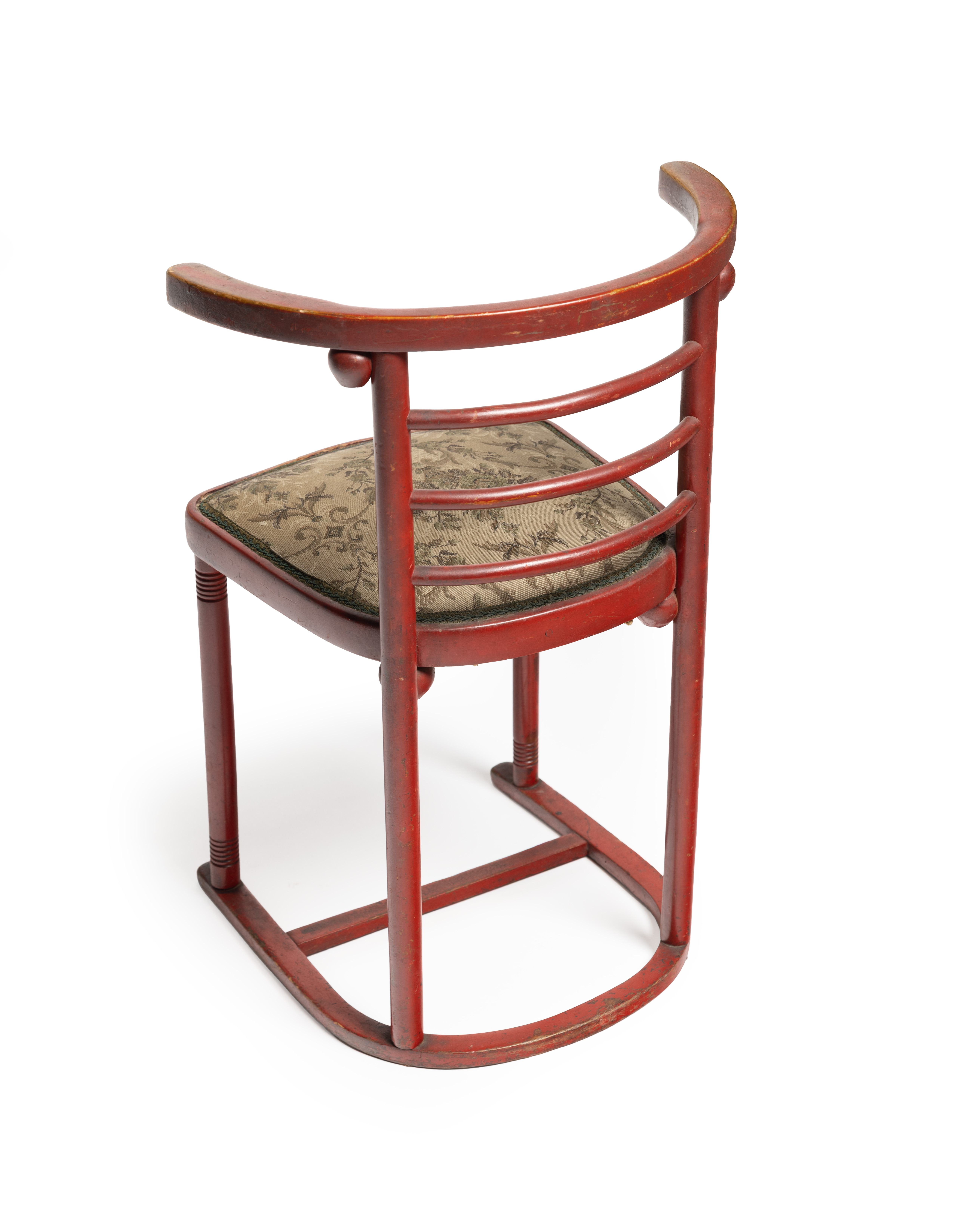
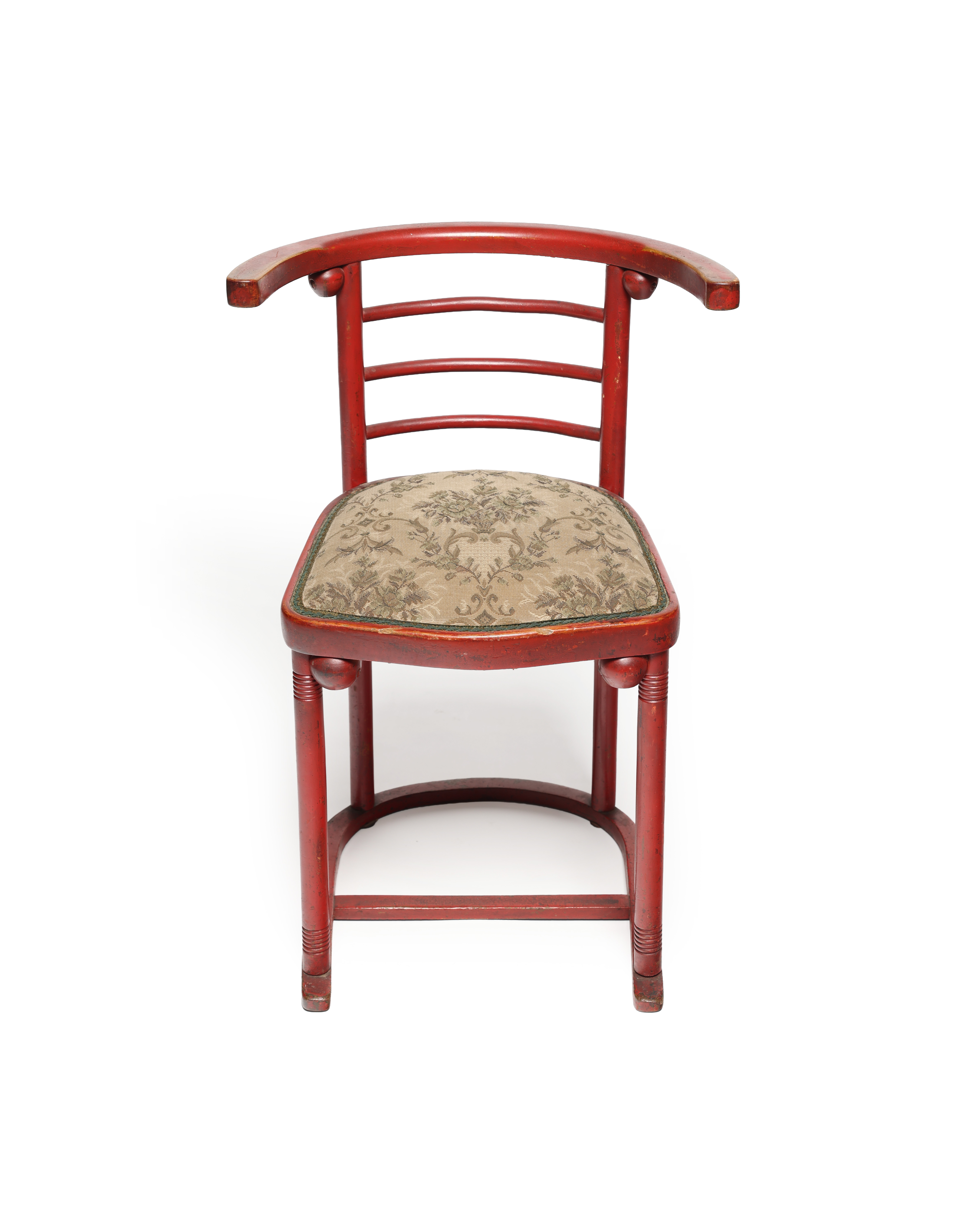

Armchair Fledermaus, model nr. 410, Josef Hoffmann, Mundus
• Dimensions: 76x55x47
• Disigner: Josef Hoffmann (1870-1956)
• Model: n. 410
• Manufacturer: Mundus
• Style: Art Nouveau
• Material and Techniques: Bentwood beech
• Place of origin: Austria
• Production period: 1907-1915
• Condition: Original.
• Identification signs: label, stamp

Reach out to us to inquire about or request a quote for the items you've selected, including your preferred quantities and we’ll get back to you as soon as possible.
The "Fledermaus" armchair is one of the most recognised objects of the Vienna Secession. Josef Hoffmann designed this model in 1906 for the Wiener Werkstätte, and in 1907 it became the centrepiece of the legendary Cabaret Fledermaus in Vienna - one of the defining spaces of the Art Nouveau era.
Cabaret Fledermaus was no ordinary nightclub. Under the direction of Egon Friedell, the venue staged the leading writers and artists of Viennese modernism. Hoffmann designed the entire interior - from the walls tiled with ceramics by Bertold Löffler and Michael Powolny, to the furniture and tableware. The chair was part of this total work of art. Model No. 728 is documented in the J&J Kohn catalogues and is held in museum collections worldwide, including the Leopold Museum in Vienna, where it is on permanent display as an example of Secessionist applied art.
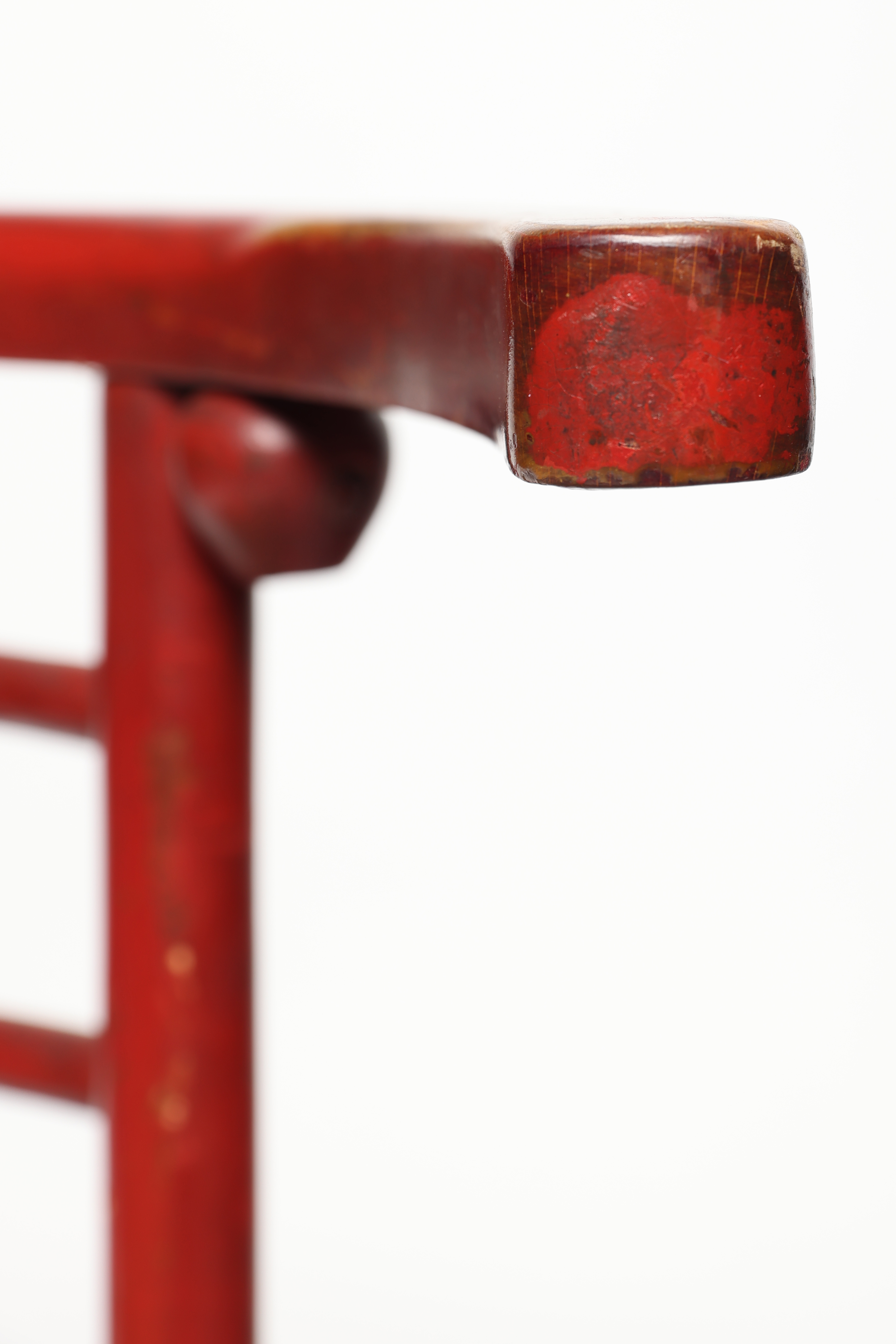
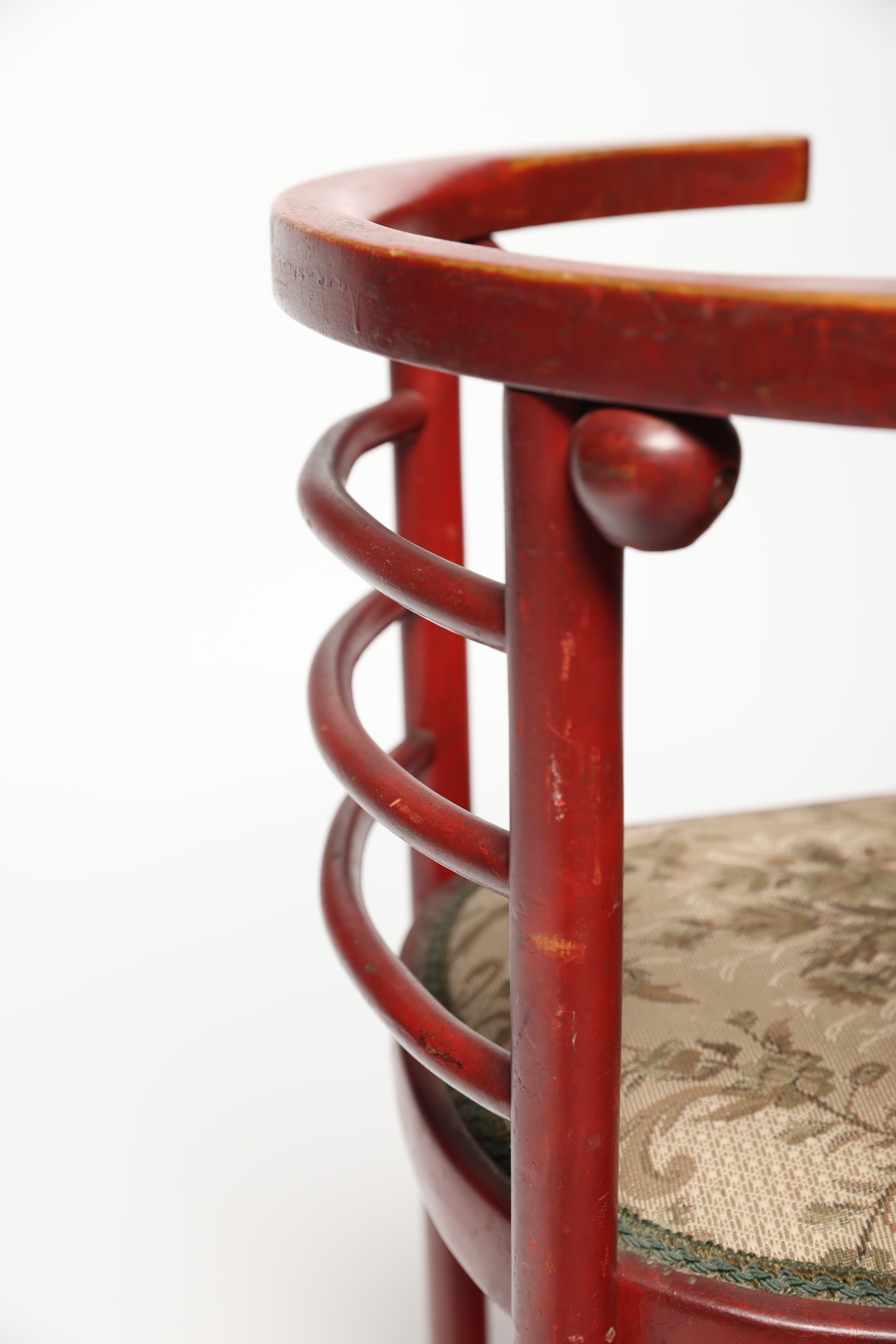
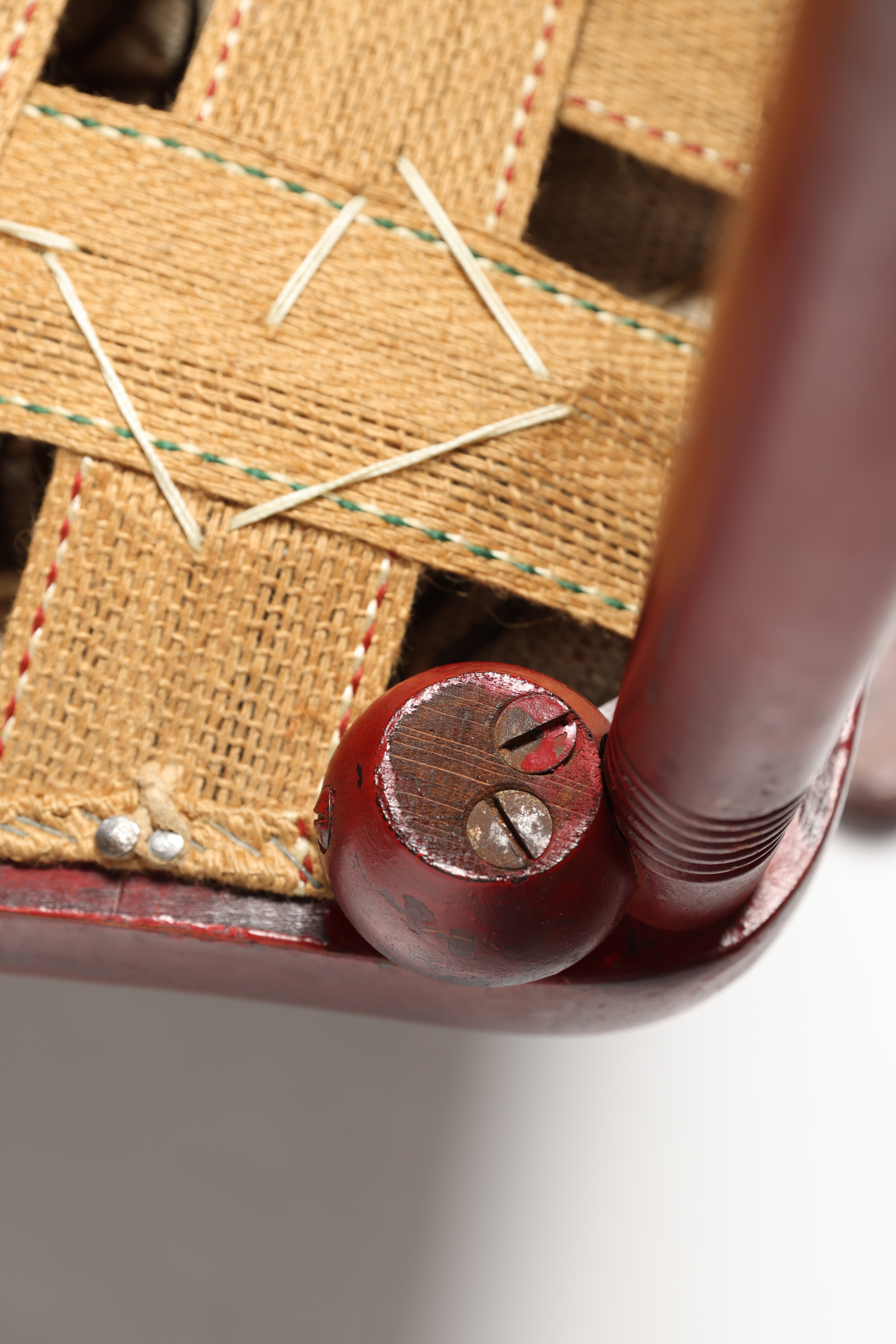
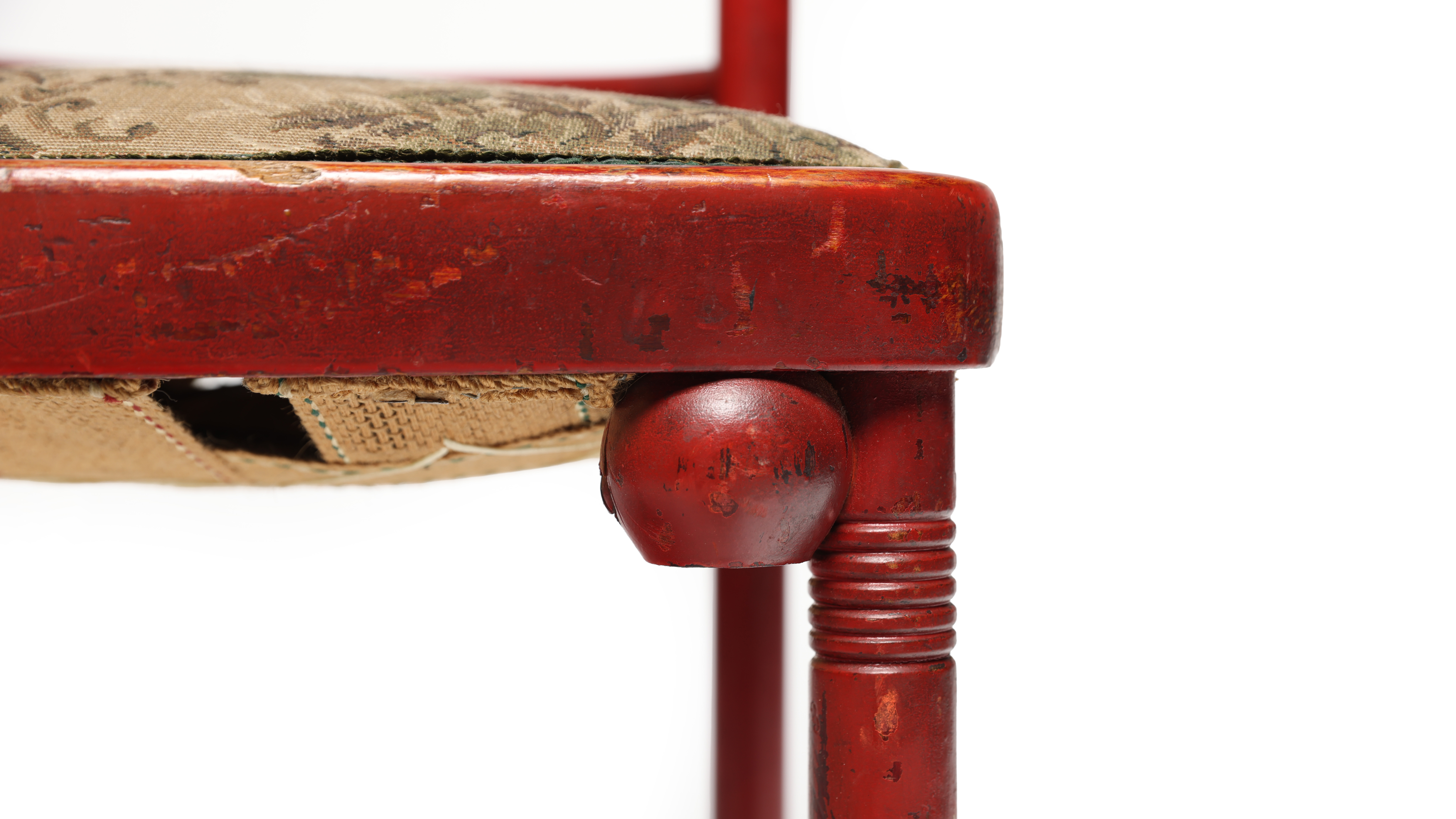
The frame is made from bent beechwood and finished in a rare red lacquer. The vast majority of known examples of Model No. 728 are executed in black or dark brown -red lacquering is considerably rarer and adds to the collectible value of the piece. Hoffmann's characteristic design elements are fully present: ladder back with horizontal rails, wooden balls at structural junctions, cylindrical legs with decorative grooves, rounded seat. The armrests flow seamlessly into the upper back rail.
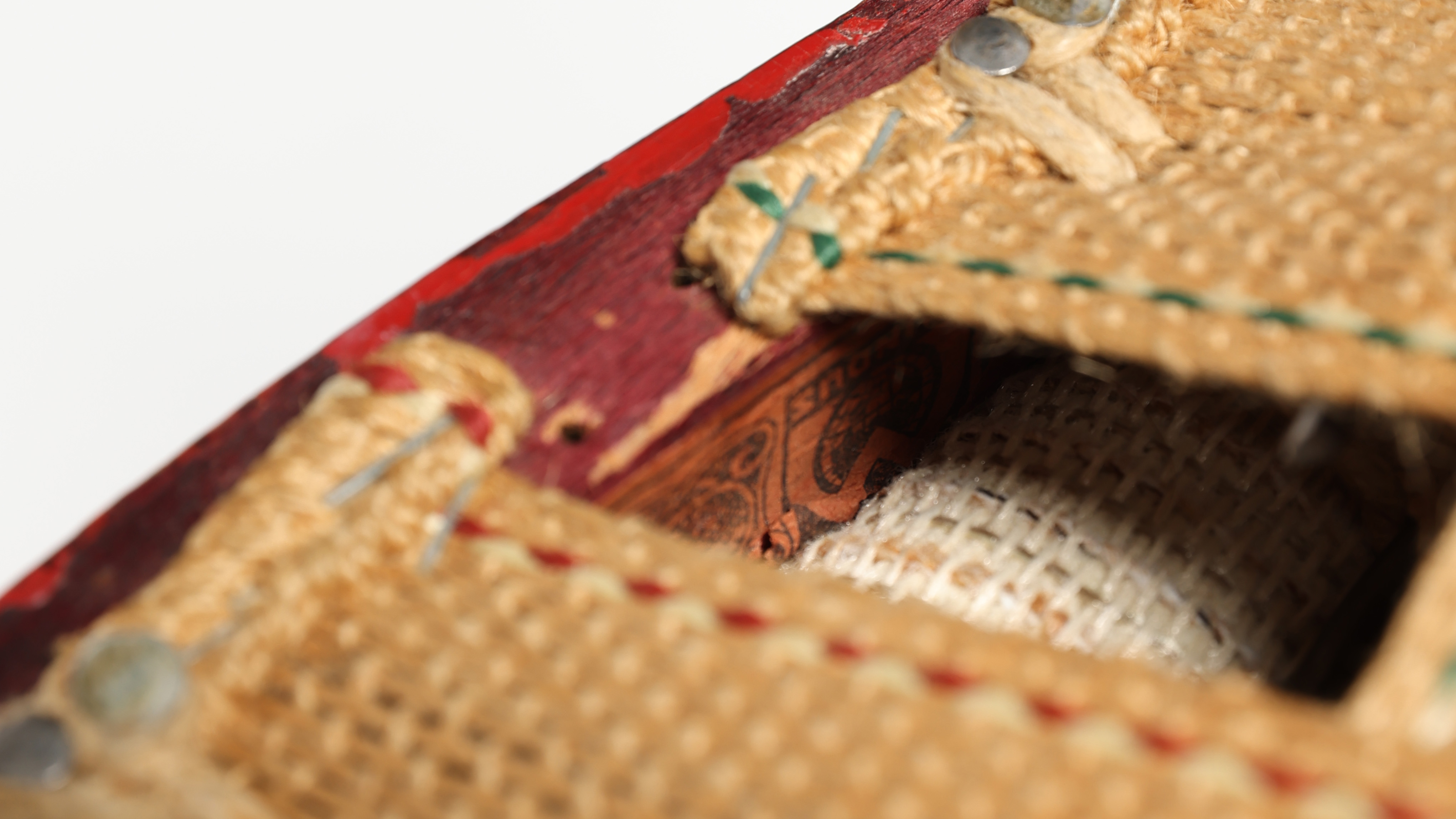
The seat is upholstered - this is likely not the original covering. The original Cabaret Fledermaus version featured leather with metal rivets. The current upholstery requires replacement or can be preserved at the owner's discretion.
The presence of an original "MUNDUS" label or stamp dates manufacture to approximately 1907–1914 - before Mundus absorbed J&J Kohn and became part of the conglomerate that would eventually form Thonet-Mundus. This represents one of the earliest production periods for this model.
Mundus was founded by Leopold Pilzer in 1907 by uniting sixteen smaller Austrian bentwood furniture manufacturers. The company operated factories in Vienna, Budapest, Borlova and other cities of the Austro-Hungarian Empire, exporting actively to Europe and the United States.