
The sanatorium in Purkersdorf was built in 1904–1905 by architect Josef Hoffmann, a student of Otto Wagner. The project marked one of the early steps toward the formation of modern Austrian architecture. Commissioned by industrialist Viktor Zuckerkandl, the building is considered a key work of the cubist-geometric phase of Viennese Modernism, distinguished by its clear planning and structural simplicity.
Zuckerkandl, the managing director of the Silesian Ironworks in Gliwice, purchased the site outside Vienna in 1903 as a “mineral spa with a therapeutic park,” which included thermal springs. The sanatorium offered mineral baths, therapeutic massage, and physiotherapy. Its quiet, light-filled, and airy spaces—characterized by minimal ornamentation—were designed to promote healing from the modern ailments of the time, particularly nervous disorders and hysteria.
The original furniture for the sanatorium was produced by the Wiener Werkstätte, with which Hoffmann was directly involved. In 1926, against Hoffmann’s wishes, architect Leopold Bauer added an additional floor, disrupting the original artistic concept. After Viktor Zuckerkandl’s death in 1927, the sanatorium passed to his relatives. The business continued with varying success; however, following the Anschluss in 1938, the family lost the property as a result of the process of Aryanization. During the Second World War, the building was used as a military hospital, and in 1945 it was requisitioned by Soviet occupation forces.
Design
The sanatorium’s architecture was based on a clear functional division corresponding to three main zones:
• physiotherapy;
• spaces for rest and social interaction;
• sleeping quarters.
Each level of the building followed a symmetrical layout organized around a central corridor. Hoffmann pursued a rational spatial organization that allowed residents to orient themselves easily and move comfortably between areas for treatment, rest, and dining. The simplicity of the plan was enhanced by glass partitions along the corridors, creating a sense of openness and transparency. In addition to treatment rooms, the sanatorium included reading rooms, a card room, a table tennis room, and a billiard room.
Hoffmann deliberately avoided historical or architectural allusions that might associate the building with traditional styles. At the time of its construction, it had no precedent. Art historian Ludwig Hevesi noted that the harmonious exterior was free of columns, pediments, or ornamental decoration. Ornamentation was limited to restrained bands of blue and white tiles around the windows, while the traditional pitched roof was replaced by a flat one. The structure was built of reinforced concrete—an exceptionally innovative solution at the time.
The building takes the form of a white rectangular volume with clearly articulated entrances, forming a cubic façade composition. The rhythmic arrangement of windows emphasizes restraint and balanced proportions. A geometric motif runs consistently throughout, from the façade to the interior. The Purkersdorf Sanatorium is regarded as the first public building constructed using reinforced concrete. The simplicity of its architectural language, combined with technical innovation, created a new mode of expression, particularly evident in the design of the staircase and the dining hall.
Materials and Interior Design
The geometric principle of the project was carried through into the interior design—in the forms of the furniture, the ornament of the floor tiles, the arrangement of beams, and the white cubic chairs with cushions. Standardization and repetition of forms created a harmonious environment free from visual overload. The height of the mirrors, as well as the design of the lighting, staircases, and furniture, were carefully considered to ensure patient comfort. Decorative elements were used sparingly; both the exterior and the interior are characterized by restraint and functional logic. Hoffmann sought hygienic clarity and architectural sobriety, in keeping with the spirit of modernism, thus creating a space where art, comfort, and healing were brought together.
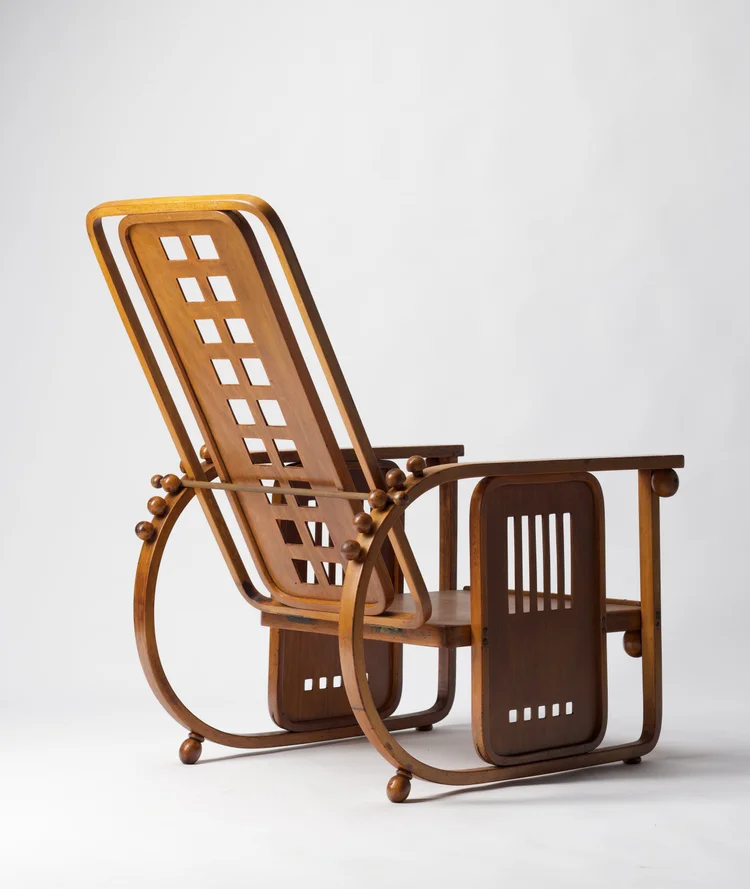
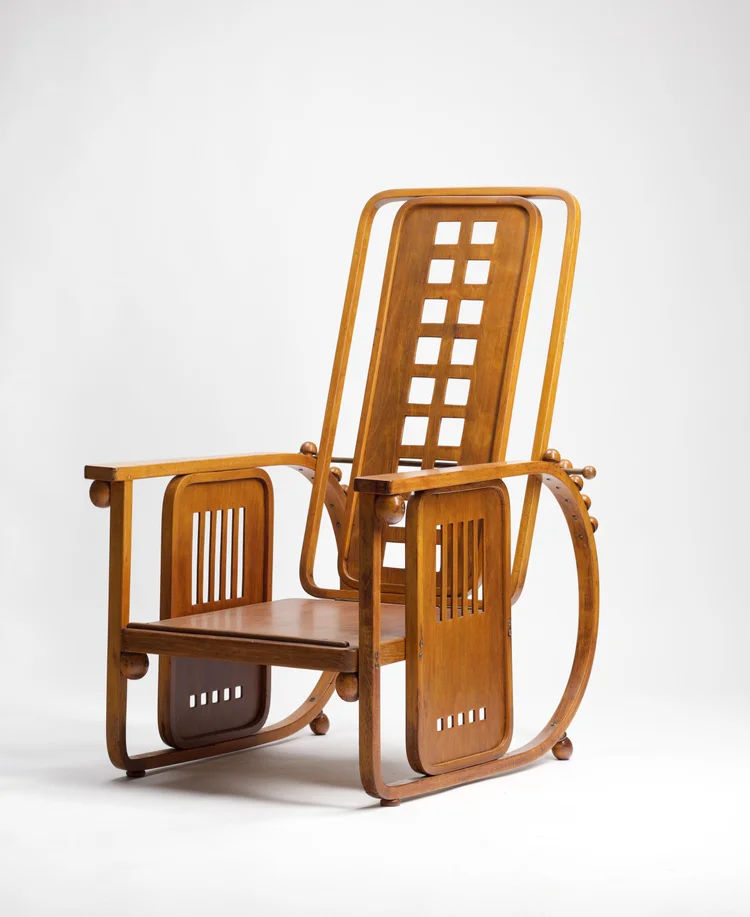
Sitzmaschine
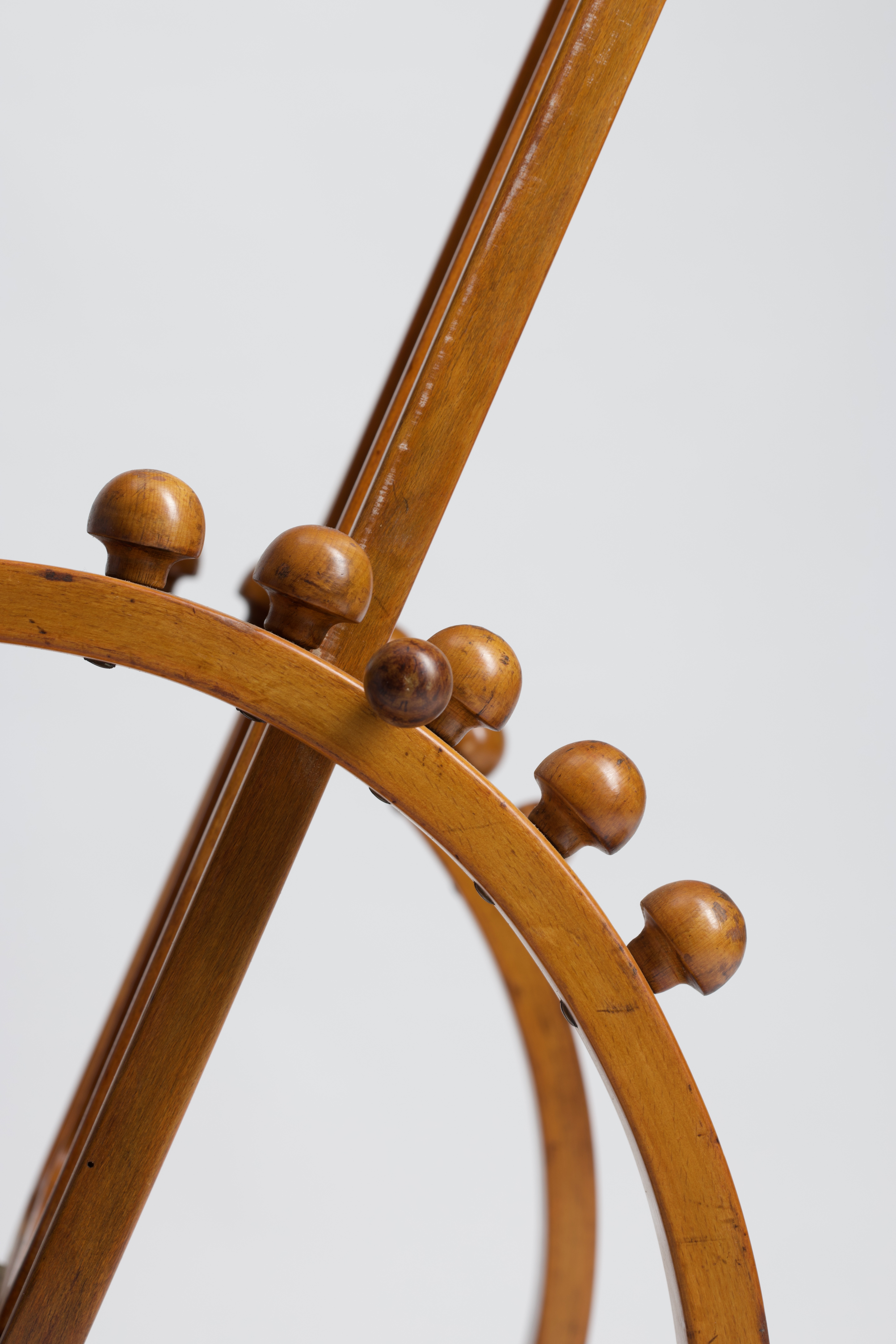
One of the most iconic furnishing elements of the Purkersdorf Sanatorium is the Sitzmaschine armchair, designed by Josef Hoffmann in 1905 specifically for this project. Its name literally translates from German as “sitting machine,” fully reflecting its concept—the combination of functionality, rationality, and geometric clarity of form.The chair was created within the framework of the Wiener Werkstätte (Vienna Workshops), an association of artists and designers founded by Hoffmann and Koloman Moser in 1903. Sitzmaschine became one of the most striking examples of the new modernist aesthetic, which rejected the excessive ornamentation of historic styles in favor of simplicity, logic, and constructive honesty.The structure of the chair is made of beech wood, with elements that emphasize its mechanical functionality. The side panels form clear rectangular outlines, while the armrests end in circular forms through which wooden rods pass, allowing the backrest to be adjusted. In this way, Sitzmaschine incorporates machine-like features while remaining an elegant and well-proportioned interior object.
The upholstery of the seat and backrest was made of fabric or leather, often in solid colors or striped patterns that harmonized with other elements of the sanatorium’s interior. The chair’s form is subordinated to the geometry of the entire project: it is based on cubic and rectangular modules, echoing the visual motifs of the architecture.
The philosophy behind this object reflects Hoffmann’s central idea of total design (Gesamtkunstwerk), in which architecture, furniture, everyday objects, and decorative details together create a unified aesthetic space. Sitzmaschine is not merely a functional object but a manifesto of a new era—a transition from decorative Art Nouveau to the rationalist design of the twentieth century.
Over time, the chair became an icon of early modernism. It was produced serially by the Wiener Werkstätte and later by the J. & J. Kohn factory, which made it accessible beyond the confines of the sanatorium. Today, original examples of Sitzmaschine are held in museums in Vienna, New York, and London and are regarded as landmark works of early twentieth-century design.
SCHEBENTWOOD, together with the Yurii Stashkiv Foundation, organized this event to share perspectives and to explore art through objects—their significance and their influence on how we shape and perceive the world around us. SCHEBENTWOOD is a company working with objects of the Vienna Secession and modernism, forming private collections and providing artistic restoration services and consultancy related to objects from this period. The Yurii Stashkiv Foundation is a network of artistic and social platforms dedicated to the creation, promotion, and preservation of art.
The exhibition takes place at: Zymna Voda village, Yavorivska Street 48, PROSTIR, Box No. 6. It is open every weekend from December 13 to January 25. Opening hours: 12:00–18:00.
REGISTRATION
